

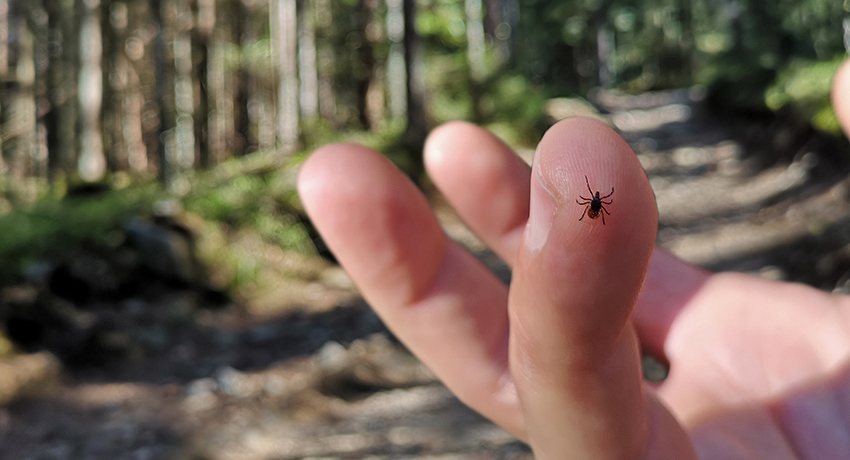
Tick-related emergency room visits ticked upward across the country in July, putting these tiny pests in the national spotlight. Data from the Centers for Disease Control and Prevention reveal that the 2025 numbers are the worst since 2019. Although most tick bites do not require an ER visit, they can lead to serious infections, such as Lyme disease and Rocky Mountain spotted fever.

Despite the summer surge this year, tick season in Texas is no longer just a spring and summer concern. While those warmer months still see peak activity, ticks are increasingly being spotted in winter, too. This means Texans and their pets need to stay vigilant year-round.
“As the winters are becoming milder due to climate change, the tick breeding season and subsequent tick population has increased,” said Rodrigo Hasbun, MD, an infectious disease specialist at UT Physicians Multispecialty — Bellaire Station. “The increased ER visits are most likely due to the combination of increasing tick population and outdoor exposure.”
Understanding ticks in Texas
Although Harris County reported eight Lyme disease cases from 2019-2022, Texas is not an area that typically sees this tick-borne bacterial infection. The northeast United States has the highest prevalence.
“The majority of patients with positive Lyme serologies in our clinics are false positives or patients who have traveled to endemic areas,” said Hasbun, professor and Graham Faculty Fellow in the Division of Infectious Diseases at McGovern Medical School at UTHealth Houston.
Hasbun said the lone star tick and the blacklegged tick (commonly called the deer tick) are among the most concerning species in Texas. American dog ticks and several types of soft ticks also pose risks. The lone star tick poses a unique risk that can trigger a rare red meat allergy, which may cause a severe allergic reaction hours after eating meat. The blacklegged tick is more common in areas with a higher deer population.
Diagnosing the bite
Not all ticks carry disease. Another misconception is that a tick bite immediately transmits disease. Hasbun said ticks need to feed on your skin for more than 24 hours to transmit infections, such as Lyme disease.
Tick bites can vary in appearance and often look like a mosquito bite with a dark spot in the center where the tick is still attached. Lyme disease presents as a rash that looks like a circle or bullseye.
Symptoms from a tick bite can vary depending on the specific tick-related illness. Generally, these include fever and chills, aches and pains, fatigue, and a rash.
Protecting yourself and your family
Tick encounters are most likely to occur in wooded areas or places with tall grass. The best defense against ticks is similar to mosquito protection:
- Wear long-sleeve shirts and pants when hiking or spending time in wooded areas.
- Apply DEET or permethrin to clothing to repel ticks.
- Always check for ticks after outdoor activities.
Parents should take extra precautions with kids who play outside. Use insect repellent, dress them in protective clothing, and do a tick check at the end of the day.
Ticks can be easy to miss, especially in their poppy seed-sized nymph stage. If you find a tick has attached to your skin, fine-tipped tweezers are the safest way to remove it.
With some vigilance and preparation, this ticking time bomb doesn’t have to spoil your outdoor fun.