

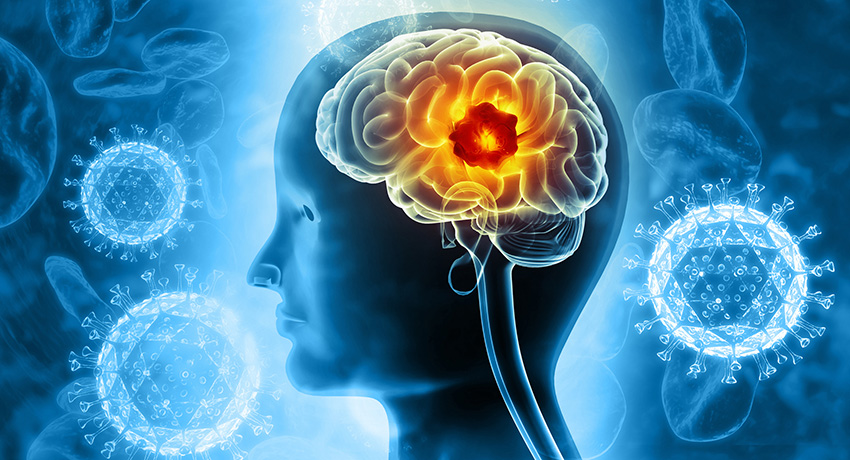
It’s easy to brush off a headache or forgetfulness as stress. But for some women, these signs may point to something more serious — a brain tumor. Unfortunately, women take the top spot for developing noncancerous brain tumors at 64%, according to the National Brain Tumor Society. Understanding the signs is the first step toward faster diagnoses and better outcomes.
Types of brain tumors
Brain tumors, the growth of abnormal cells in the tissues of the brain, fall into two main categories: primary tumors, which originate in the brain, and metastatic tumors, which spread to the brain from cancer elsewhere in the body.
Meningioma

“For women, the most common primary brain tumor is a meningioma,” said Jay-Jiguang Zhu, MD, PhD, a neurologist at UTHealth Houston Neurosciences — Texas Medical Center who has advanced training in neuro-oncology. He’s also a professor in the Vivian L. Smith Department of Neurosurgery at McGovern Medical School at UTHealth Houston.
Meningioma tumors are classified as Grade 1, Grade 2, or Grade 3, based on how the cells look under a microscope.
“A meningioma is mostly low-grade or ‘benign,’ which is classified as Grade 1. There are malignant meningiomas, or Grade 3, but they are rare. The intermediate level of growing potential meningioma is Grade 2 or atypical meningioma, which is the minority,” Zhu said.
Pituitary adenoma
A pituitary adenoma is the second most common primary brain tumor. The tumor originates in the pituitary gland, the master organ of our endocrine system that resides at the base of the brain in an area behind the nose.
Glioblastoma multiforme (GBM)
The most common type of malignant primary brain tumor under the umbrella of glioma is glioblastoma multiforme (GBM). It’s also the third most common primary brain tumor. Zhu said this is the deadliest brain tumor as it grows quickly and is more difficult to treat. On average, people live 11 to 12 months after being diagnosed. Some people who participate in clinical trials live 14 to 21 months.
“GBM develops from cancer stem cells in a different pathway that’s more resistant to chemotherapy or radiation,” Zhu said. “That’s why it keeps growing, even with treatment.”
People with lung cancer, breast cancer, and melanoma, for example, can have brain metastases. Breast cancer-related brain metastases often appear years after the initial diagnosis, even when breast cancer seems under control. Zhu said patients can have clear mammograms, but the disease has quietly spread to the brain or bones.
Benign is not ‘fine’
Zhu emphasized the disconnect in using the term “benign” to describe noncancerous brain tumors. Benign is not “fine,” and the National Brain Tumor Society agrees.
“It’s a concept we correct with patients all the time,” Zhu said. “For some tumors, patients are cured, but that’s very, very few. They all come back — maybe in 10 or 20 years.”
Instead, the profession uses the term low-grade in place of benign, meaning they are slow-growing and generally less aggressive. Even though Grade 1 and Grade 2 tumors are considered low-grade, they can still cause serious symptoms depending on their location in the brain.
Symptoms women shouldn’t ignore
Brain tumor symptoms vary depending on the tumor’s location, but common signs include:
- Persistent headaches
- Nausea or vomiting
- Seizures
- Vision changes, especially peripheral vision loss
- Memory decline
- Weakness or numbness in limbs
“Gradual neurological function decline, such as memory loss, is often dismissed in older adults as aging,” Zhu said. “But if family members notice changes, it’s worth getting checked out. Meningiomas can cause subtle symptoms early on and gradual deterioration of neurological functions that are mistaken for normal aging, fatigue, or stress.”
How hormones play a role
Other symptoms may be mistakenly chalked up to stress, menopause, or lifestyle factors. Hormones, particularly estrogen, may influence the growth of certain brain tumors. Meningiomas often contain estrogen receptors, which can accelerate tumor growth during times of hormonal change, such as pregnancy.
“If estrogen is excessive, the meningioma grows faster,” Zhu said. “But it’s a very slow process because the body can adapt if the neurological impairment occurs gradually. Most women won’t notice symptoms until the tumor reaches a certain size.”
Diagnosing a brain tumor
Specialists typically diagnose brain tumors with a neurological exam and imaging test, such as a CT scan or MRI with and without contrast. Zhu said an MRI is about 99% accurate for meningiomas, but they still need tissue confirmation from a pathologist after surgery, which will relieve the mass effect. The grade — whether it’s 1, 2, or 3 — guides the treatment plan as determined by a team of specialists like neurosurgeons, radiation oncologists, and neuro-oncologists.
Treatment options
For Grade 1 meningiomas, surgery may be enough, followed by regular MRI monitoring. But Grade 2 (atypical) and Grade 3 (malignant) meningiomas often require radiation therapy.
“Malignant meningiomas grow back quickly,” Zhu said. “Surgery alone isn’t enough. Radiation is a necessary second step.”
Chemotherapy is less effective for meningiomas and is typically reserved for cases where surgery and radiation are no longer viable. Zhu said they’re hopeful that clinical trials will lead to better therapies, especially for malignant cases.
Early detection is key
Since many brain tumors grow slowly, they’re often missed until symptoms become severe. Zhu emphasized the importance of sharing symptoms with a primary care provider who can make a referral to a neurologist or order a CT or MRI.
“Not all headaches are caused by a meningioma, glioblastoma, or other brain tumor,” Zhu said. “Imaging is the most definitive way to rule out a brain tumor and give patients peace of mind.”