

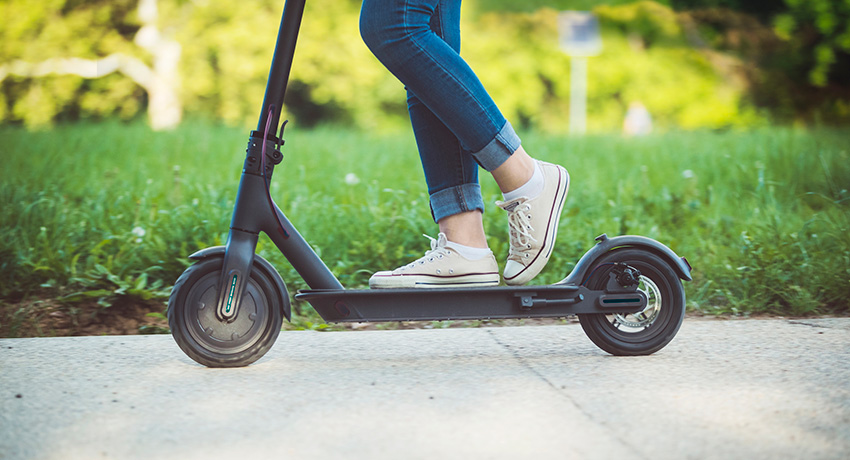

As the popularity of electric bicycles (e-bikes) and electric scooters (e-scooters) has grown, so too have the risks that come with them.
“This is definitely a growing trend. I see kids riding them all over my neighborhood, and I know my patients are riding them, too,” said Sandra L. McKay, MD, a pediatrician at UT Physicians Pediatric Primary Care – Texas Medical Center. “Whenever we see a new product, we also see new injuries.”
Why e-bikes and e-scooters pose unique risks
Unlike a traditional bicycle or scooter, e-bikes and e-scooters can reach much higher speeds at a much faster rate, with some models reaching up to 40 miles per hour.
“Because they’re going so fast, it leaves the rider with less time to react, which can lead to a higher rate of injury,” said McKay, an associate professor at McGovern Medical School at UTHealth Houston.
Common injuries from e-bike and e-scooter crashes
As an injury prevention physician-scientist, McKay provides follow-up care after hospital visits.
“We are definitely seeing more children for follow-up care after an emergency room visit for e-bike or e-scooter injuries,” McKay said. “We see a lot of road rash, which is a painful, friction-induced skin injury.”
Common e-bike and e-scooter injuries include:
- Broken bones: arms, legs, wrists, and fingers
- Facial and dental trauma
- Internal injuries: pancreatitis and internal bleeding
- Lacerations: cuts to the chin and arms
- Traumatic brain injury: concussion
Who is most at risk?
New and young users are most at risk of crashing. Other pedestrians or bystanders are also at risk of being hurt as a result of an e-bike or e-scooter crash.
“It’s a growing public health concern to have these e-bikes and e-scooters sharing the sidewalks with slower foot traffic, but also sharing the neighborhood streets where cars are larger and take longer to react,” McKay said.
How to reduce the risk of injury
Reducing the risk of injury begins with protecting the head.
“Helmets can reduce the risk of severe brain injury by up to 80%,” McKay said. “Not wearing a helmet is the most dangerous thing you can do when riding an e-bike or e-scooter.”
- Always wear a helmet and other protective gear.
- Make sure the rider is clearly visible and wearing reflective clothing, especially if riding at night.
- Never wear headphones.
- Only allow one rider at a time.
- Follow the rules of the road.
What to do after an e-bike or e-scooter accident?
If involved in a crash, seek medical care immediately if there are any signs of injury.
“Failure to identify a serious injury could delay treatment and intervention that could be lifesaving,” McKay said.
Signs of a concussion:
- Changes to vision
- Headache
- Vomiting
Signs of internal injury:
- Pain, swelling, or bruising of the abdomen
- Vomiting
How to balance fun with safety
As the popularity and affordability of e-bikes and e-scooters have increased, so have injuries. This is a growing public health concern, but they can be enjoyed safely if used appropriately.
“The first question any parent should ask is, ‘Is my child mature enough and developmentally ready?’” McKay said. “The rider must be able to be responsible for anything that happens while they are riding away from home.”
Following safety rules, such as wearing a helmet and abiding by the rules of the road, should be non-negotiable for parents. When you ride safely on an e-bike or e-scooter, the fun goes further.