

For many, the word “colonoscopy” brings uncertainty, unease, or a sense of dread. But screening conversations are starting earlier. Rates of colon cancer in adults under 50 have been rising for years, and the recommended screening age has dropped from 50 to 45. For those in their 30s with a family history — or symptoms they’ve been brushing off — the timeline may be even shorter.
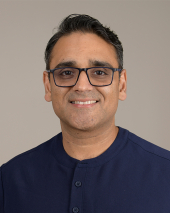
Kumar Pallav, MD, a gastroenterologist at UT Physicians Multispecialty – Bellaire Station and associate professor of gastroenterology at McGovern Medical School at UTHealth Houston, addresses the questions younger adults are asking.
Am I too young to need a colonoscopy in my 30s?
For adults without symptoms or known risk factors, screening typically begins at age 45. But family history changes everything.
“If someone has a first-degree family member with colon cancer, ideally you want to start colonoscopy screening 10 years before the member developed their cancer, or at 40, whichever comes first,” Pallav said.
So, if a parent was diagnosed at age 48, the child should be screened at 38. First-degree family members include a parent, sibling, or child. Having two or more second-degree relatives with colon cancer, such as aunts or uncles, can also move up the timeline.
What symptoms should I never ignore?
Rectal bleeding is the most common warning sign of advanced colon cancer, though hemorrhoids are a far more frequent cause of the bleeding. It’s reasonable to treat it as a hemorrhoid, but consider a colonoscopy if it doesn’t get better.
“Persistent abdominal pain, change in bowel habits, and rectal bleeding are symptoms that should never be ignored,” Pallav said.
Extreme weight loss is another red flag worth raising with a doctor, regardless of age.
What actually happens during a colonoscopy?
A colonoscopy procedure is simpler than it sounds.
“I’m using a tube about the size of my thumb, with a camera and a light on its end. We go in while the patient is sedated, move the scope to the right side of the colon, pull back slowly, and look carefully. If we see any polyps, we remove them.”
The whole procedure takes about 10 to 15 minutes. Since patients are sedated, they remember nothing.
Is the prep really as bad as everyone says?
It used to be worse. The four-liter prep of the past is largely history, Pallav said. Today’s most common option is a split prep that gives better results. It involves drinking about 96 ounces of fluid in two sessions — the evening before and the morning of the procedure. About two-thirds is water, and medication is mixed in to the added third. Another prep option involves pills taken with lots of water.
“You’re going to have five to 10 bowel movements in the two to three hours that follow,” Pallav said. “Be close to a bathroom. But there’s minimal to no cramping for most healthy people.”
His benchmark for a successful prep? Pallav said if your stool looks like Mountain Dew or urine, you’ve done your job!
Can I just do an at-home test instead?
At-home options, like a stool-based test with 95% sensitivity, and newer blood-based screening tests are real alternatives, particularly for those who can’t or won’t do a colonoscopy prep. But there’s an important difference between detecting cancer and preventing it.
“The non-invasive tests are like waiting for an accident to happen before you throw the seatbelt on,” Pallav said. “But with a colonoscopy, you’re throwing the seatbelt on so the accident doesn’t cause serious injury.”
Pallav said removing polyps during a colonoscopy before they become cancerous reduces colon cancer risk by about 75% — roughly a decade before a cancer would have formed.
Factors affecting younger-onset colon cancer
Diet is a significant factor. Pallav said processed foods, red meat, alcohol, obesity, and a sedentary lifestyle all increase risk. And more and more kids and young adults are being exposed to processed foods.
“If you’re a beer-and-burger kind of person who doesn’t eat their vegetables, you’re at a high risk of developing colon cancer,” Pallav said.
The most important message Pallav emphasized? Colonoscopies are not just for finding colon cancer. They actually prevent colon cancer, save lives, and save people from having a poor quality of life.
“A colonoscopy is not just a screening tool, but a preventative tool for reducing your risk of colon cancer,” Pallav said.