

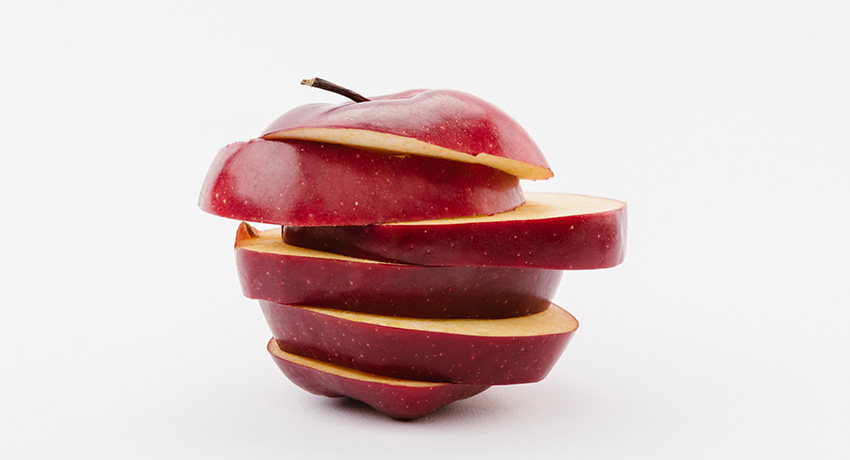
Few foods are as ordinary as an apple. Toss one in a lunch bag, slice it for a snack, or grab one on the go. For generations, we’ve been told an apple a day is good for us. But what is it about apples that earned them such a healthy reputation in the first place?
Research continues to show how apples can benefit health in many ways. While eating one every day certainly doesn’t guarantee skipping your next doctor’s appointment, a whole apple offers benefits that juice and other apple products don’t.

Dolores Woods, RDN, LD, a registered dietitian and nutrition supervisor at the Michael and Susan Dell Center for Healthy Living at UTHealth Houston School of Public Health, says the familiar phrase points to something nutrition experts continue to encourage: choosing whole foods and getting nutrients from food first.
“There’s so much noise and so many supplements out there,” Woods said. “I like to simplify it and say, ‘Eat food first.’”
Apples make that easy. They combine fiber and polyphenols that have a positive effect on blood pressure, cholesterol, vascular health, blood sugar regulation, and gut microbiome support.
There’s a lot under that peel
Think twice before you peel your next apple. Much of what makes apples good for us is concentrated in the skin. A large apple contains about 4 grams of fiber—much of which is found in the peel. Removing it also takes away some of the apple’s polyphenols, beneficial plant compounds with antioxidant and anti-inflammatory properties.
Pectin, the apple’s primary soluble fiber, forms a gel-like substance during digestion. Woods says that quality explains how fiber can support healthy cholesterol levels and slow glucose absorption. Apples also contain insoluble fiber, which adds bulk and can make an apple more satisfying.
Why the whole apple wins
One study comparing apples, applesauce, and apple juice found that whole apples produced the greatest feeling of fullness. A whole apple also takes longer to eat, adding to that effect. Woods said even the act of chewing an apple plays a role. Chewing breaks down the fruit’s physical structure and helps the body access its compounds.
Juicing removes much of the fiber found in the whole fruit. Without that intact fiber, the fruit’s natural sugars can be absorbed more quickly. Applesauce may retain more of the fruit than juice, but the whole apple provides the complete package.
And apple cider vinegar? Woods doesn’t consider it a substitute either. The evidence behind many of its health claims remains limited, and it doesn’t offer the fiber and nutrients found in a whole apple.
“The texture, flavor, and overall eating experience are going to be so much more enjoyable if you’re eating a whole apple instead of apple cider vinegar,” Woods said. “There are so many effects of how the whole food and our entire diet work together, not just think of them as individual ingredients.”
Does the type of apple matter?
Walk through the produce section, and you’ll find plenty of choices, from tart Granny Smith to sweet Gala, Fuji, or Honeycrisp. Different varieties have slightly different fiber and polyphenol profiles. Woods said color can offer some clues, with brighter and redder apples generally containing more polyphenols.
Easy ways to add apples to your diet
One apple a day is Woods’ recommendation, with studies showing an association between apple consumption and lower cardiovascular mortality and stroke risk.
Here are a few ideas:
- Pair apple slices with peanut butter or cheese for protein and healthy fat.
- Add apple slices for sweetness and crunch in spinach or kale salads.
- Roast apples as part of a sheet-pan dinner with chicken and vegetables.
While an apple a day can’t guarantee fewer visits to the doctor, the centuries-old proverb still offers a simple reminder: Choose whole foods you enjoy, and eat the peel, too.