
Sleep is supposed to be a time when our bodies recharge, reset, and recover. But for millions of people, that rest is interrupted — sometimes hundreds of times a night — by a condition called sleep apnea. Surprisingly, an estimated 80% to 90% of cases remain undiagnosed.
Obstructive sleep apnea, the most common type, occurs when the airway repeatedly narrows or collapses as muscles and soft tissue relax during sleep. These brief awakenings, which are caused by your brain responding to the airway collapse, do more than disrupt your rest.

“Sleep actually becomes more of a stressful time for the cardiovascular system and the heart,” said Calli A. Bertschy, DO, a pulmonologist and sleep medicine specialist at UT Physicians Internal Medicine – Texas Medical Center. “Untreated sleep apnea can affect everything from blood pressure to diabetes risk to heart health and cognitive function.”
Normally when we sleep at night, Bertschy said our blood pressure naturally falls and settles with less variation. The time we spend sleeping is protective for the body and heart.
“When there is abnormal breathing at night, that protective mechanism can be lost, creating a significant risk for cardiovascular issues over time, such as high blood pressure, heart disease, atrial fibrillation, stroke, and even sudden cardiac death,” said Bertschy, an assistant professor in internal medicine at McGovern Medical School at UTHealth Houston.
Warning signs to watch for
Sleep apnea might not appear the way you expect. Loud snoring is a classic symptom, but it’s not always present. Bertschy breaks down the warning signs into two categories: nighttime and daytime.
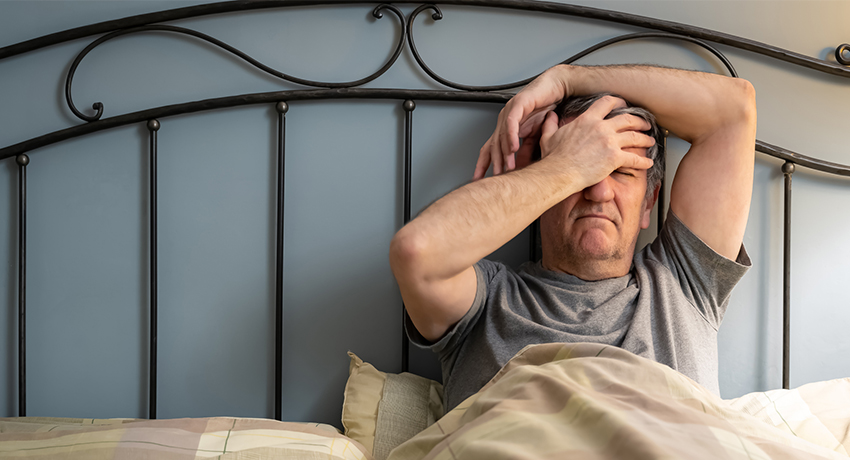
Nighttime symptoms include snoring, gasping or choking during sleep, nighttime awakenings which may include trips to the bathroom, waking with a dry mouth, and morning headaches.
Daytime symptoms often mirror sleep deprivation, such as feeling unrefreshed when waking and excessive sleepiness. Other symptoms include mood changes, such as irritability, and difficulty concentrating. Patients sometimes describe it as brain fog.
Who’s at risk for sleep apnea?
Common risk factors include increasing age, being male (though women’s risk after menopause matches that of men), obesity, and a neck size greater than 17 inches for men or 16 inches for women. Family history also plays a role, as we inherit our airway anatomy from our parents.
However, Bertschy said sleep apnea can affect anyone, regardless of risk factors. In fact, about 25% of people with sleep apnea are not overweight (BMI< 25), and up to 40% to 50% are not obese (BMI< 30).
“If symptoms are there, it’s worth getting checked,” Bertschy said.
Deadly consequences
Beyond long-term health effects, untreated sleep apnea can also create serious safety risks. Research shows that drivers with untreated sleep apnea have a 50% higher risk of motor vehicle crashes than those without the condition. The encouraging news is that treatment works.
“When sleep apnea is treated, crash risk drops back down to near-normal levels and that improvement can happen quickly,” Bertschy said. Studies show improvements in sleepiness in as little as two days after treatment begins.
Treatment options
Continuous positive airway pressure, or CPAP, remains the gold standard treatment for obstructive sleep apnea. For those who feel hesitant, today’s machines look and feel different from earlier models.
“CPAP devices aren’t a ‘set it and forget it’ situation,” Bertschy said. “Modern machines are quieter, provide detailed feedback for personalized adjustments, and offer numerous mask options — some masks are so small they sit just under the nose.”
Alternative treatments beyond CPAP include specialized mouth guards from dentists trained in sleep dentistry, surgically implanted devices that stimulate tongue movement during sleep, weight-loss medications, and certain upper airway or jaw surgeries.
Making small changes
Simple lifestyle changes can also reduce symptoms:
- Sleeping on your side instead of your back (positional therapy)
- Limiting alcohol before bedtime
- Managing allergies or nasal congestion
- Practicing tongue-strengthening exercises (myofunctional therapy)
Sleep apnea is treatable, and often life-changing, once it’s identified.
“Like high blood pressure or diabetes, sleep apnea can go unnoticed for years while quietly affecting your health,” Bertschy said.
If someone believes they might have sleep apnea, Bertschy encourages them to take it one step at a time, starting by talking with their doctor.