
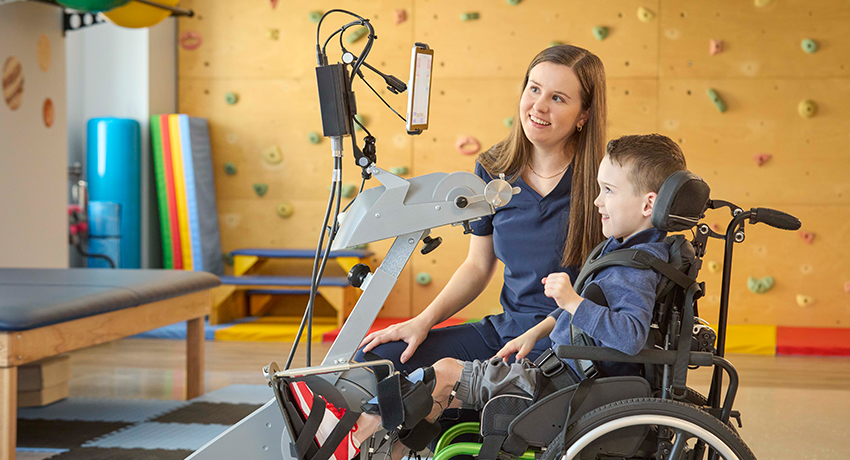
When a child needs specialized therapy, families often stretch themselves to make it happen, even traveling out of state. UTHealth Houston Pediatric Movement Disorders Center (PMDC) is changing that with the opening of Mission Control Therapy gym. This brightly-colored, dedicated space provides intensive, short-term therapy programs for its patients, right here in Houston. The goal is simple: make life-changing care more accessible and keep families together.

Mission Control Therapy, aptly named after the space-themed mural on the wall, was designed to fill that specific need without replacing existing therapy resources. Most PMDC patients receive traditional outpatient therapy through UTHealth Houston partner, TIRR Memorial Hermann. While that partnership remains strong, the new center adds a focused option for children who would benefit from a short-term, goal-centered program.
“This is a one-of-a-kind in the world,” said Manish N. Shah, MD, a pediatric neurosurgeon at UT Physicians Pediatric Surgery – Texas Medical Center. “I am proud of how exceptional the university and its leadership have been in supporting the vision of PMDC.”
Shah also serves as professor and director of pediatric neurosurgery at McGovern Medical School at UTHealth Houston, John P. and Kathrine G. McGovern Distinguished Chair, THINK Neurology Chair in Pediatric Tumor Research and Innovation, and co-director of the PMDC.
Filling a gap in care
For many children with movement disorders, care can involve visiting several clinics and working with multiple specialists who may not be fully connected in their treatment plans.
“We want to give families a local option for short, high-frequency episodes of care and other specialty services filling gaps in care for our PMDC patients. These are intensive therapy programs that patients often travel out of state to receive,” said Christine Hill, PT, C/NDT, manager of therapy services in pediatric neurosurgery at McGovern Medical School. “This complements traditional services at TIRR Memorial Hermann and keeps expert physician input at the center of care.”
What makes Mission Control unique
The new therapy center offers three-week programs, five days a week, often involving multiple disciplines, such as physical, occupational, and speech therapy. These sessions are paired with physician expertise, when needed, such as for tone management for cerebral palsy patients or neuromuscular care. Hill said this approach ensures every child’s unique needs are met in one coordinated setting.
The therapy space features evidence-based equipment focused on strength, functional mobility, and postural control, including upper- and lower-extremity Functional Electrical Stimulation bikes, rock wall, and body-weight supported treadmill training. Each tool is created to help children as they build skills needed for everyday life. Patients can also take advantage of feeding intensives as well as constraint induced movement therapy.
Families at the heart of care
Mission Control’s model extends beyond clinic walls. It partners with families, who play an essential role in setting goals and learning how to maintain progress at home. Families are trained in a targeted home program that contributes to real-life changes.

“The goal of therapy, in general, should be improving the child’s participation in the family routines and in their environment, like school or any extra-curricular activities,” Hill said.
Looking ahead
The new therapy space is one of the eight areas of care within the PMDC. The PMDC team is focused on building a program that offers hope and convenience for families of children with movement disorders and related conditions, including neuromuscular disorders, stroke, and complex musculoskeletal needs. They also offer specialized therapies, such as deep brain stimulation, surgical tone management, and developmental delay assessment for infants and toddlers.
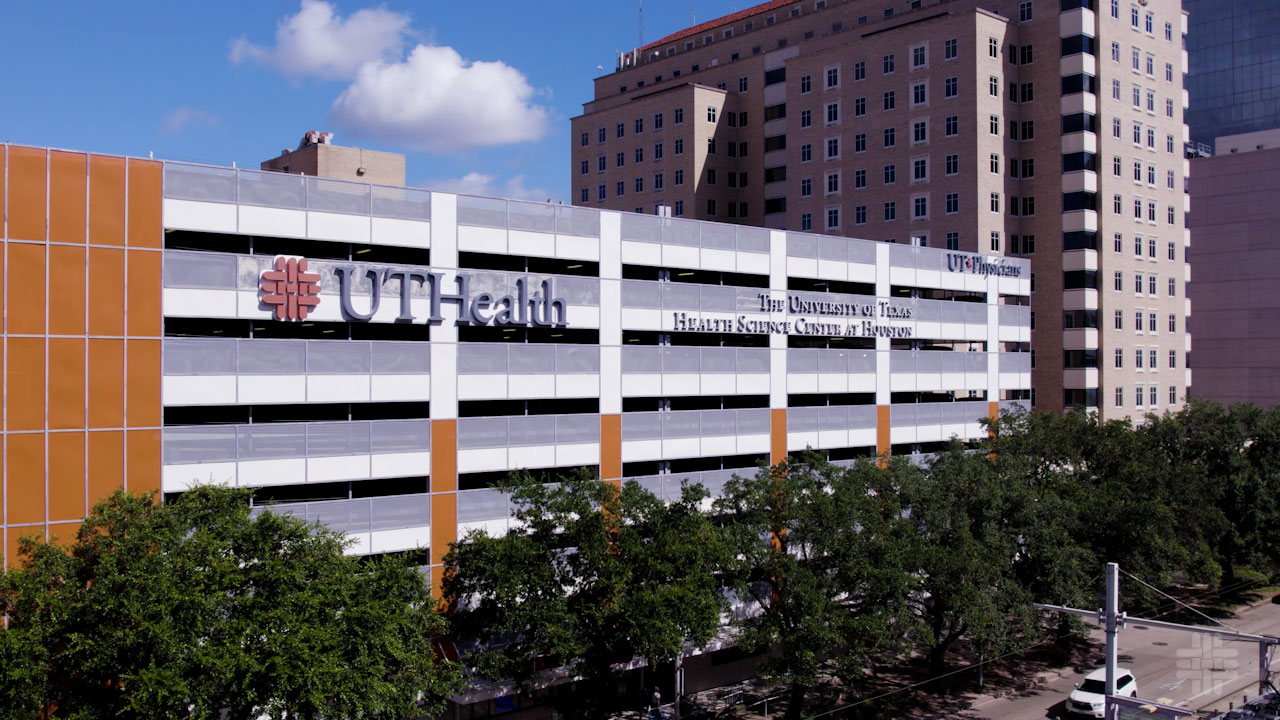
Mission Control Therapy is located in the UTHealth Houston Professional Building – Texas Medical Center, 6410 Fannin St., Suite 950. For additional information, call 832-325-7242.