

It’s a childhood injury that can happen during everyday moments: a parent quickly pulling a child back from traffic or lifting them off a curb. Historically known as nursemaid’s elbow, the term dates back to a time when nursemaids — young women employed to care for children — were often blamed for this type of injury in their caregiving role.
Today, the condition is more accurately referred to as radial head subluxation, a common partial dislocation that occurs between the ages of 1 and 4. As children grow older, their ligaments tighten, which makes this injury less likely.
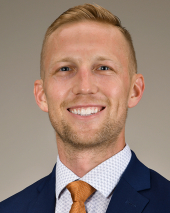
“Young kids have looser ligaments, so there’s more play in the system,” said Brennan Roper, MD, an orthopedic surgeon at UT Physicians Orthopedics at Memorial Hermann | Rockets Sports Medicine Institute — The Woodlands. “It takes just a perfect kind of pull or a perfect vector of force — usually accidental — to pull the radial head partially out of place.”
Symptoms to watch for
The radial head, a part of the forearm that helps rotate the palm, partially dislocates from its joint during the injury. A portion of the surrounding ligament becomes caught between the two bones, preventing immediate correction.
Children with nursemaid’s elbow typically hold their arm close to their body and avoid rotating their palm. Roper said they’re guarding against motion at the elbow, which is a sign that something happened. Swelling or bruising is minimal.
Seeking treatment
If the child isn’t in much pain, parents can attempt to get a same-day appointment with their primary care or pediatric orthopedic provider. Urgent care is a good option if pain is more severe or a clinic visit isn’t possible during that timeframe. Roper said doctors are well-versed in this injury. They may try a gentle reduction maneuver or take X-rays to rule out a fracture.
Treatment is usually simple and effective. Generally, the elbow can be guided back to its normal position with a gentle maneuver about 95% of the time. Roper said most kids regain full motion within 10-15 minutes and return to their usual activities.
“The treatment is just a rotation of the forearm with gentle pressure over the radial head,” said Roper, an assistant professor in orthopedic surgery at McGovern Medical School at UTHealth Houston. “Nothing forceful or extremely painful.”
Parents can sometimes help at home by gently rotating the child’s forearm with the elbow bent at 90 degrees. A click or pop means the radial head is back in place. If there are any questions or concerns, it’s best to be seen by a provider to ensure adequate reduction and no other injuries are present. Parents can mobilize the child’s elbow with a sling if they’re unsure and get seen within 24 hours.
Preventing injury
Roper said prevention remains key. While nursemaid’s elbow is rarely serious, repeated or untreated cases could hypothetically lead to complications. Fortunately, the vast majority of cases are caught quickly with no long-term impact.
“Try not to pull kids by one arm or swing them around by their arms,” Roper said. “Educating parents is the best way to avoid this injury.”