
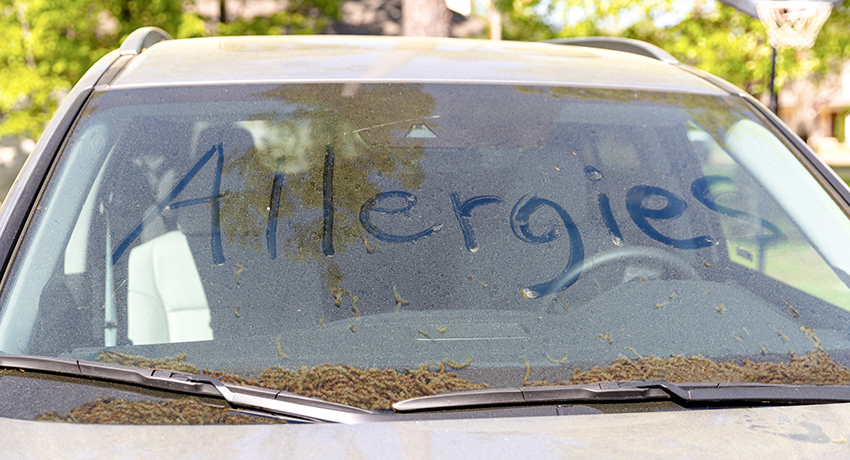
Wildflowers flanking the highway, songbirds parading in chorus, and azalea bushes bursting with magenta blooms – it can only mean one thing: spring has arrived! But in Houston, spring brings another ensemble: sneezing, wheezing, and general agony as a blanket of yellow dust covers our sidewalks, cars, and patio furniture, wreaking havoc on our airways.

“Spring allergies in Houston can be especially miserable,” said Sarah M. Nimri, MD, an allergy specialist with UT Physicians Allergy and Immunology. “Seasonal allergies are usually not dangerous, but can significantly affect quality of life, sleep, concentration, and productivity.”
Why are spring allergies so severe in Houston?
Houston’s warm climate, combined with elevated carbon dioxide (CO2) levels from dense urbanization, creates a perfect environment for an early blooming season that lasts for months. The high humidity also promotes year-round mold spore growth.
With warm winters, plenty of rain, increased global temperature and CO2, Houston is a plant’s paradise, generating high pollen counts during a prolonged pollen season.
“Climate change has further lengthened pollen seasons, with earlier starts and higher pollen concentrations, making it more likely for more people to suffer allergy symptoms,” Nimri said.
When is allergy season in Houston?
Outdoor allergies in Houston are brought on by four culprits: tree pollen, grass pollen, weed pollen, and mold spores. Each of these categories has its own season, further exacerbating the duration of seasonal allergies in Houston. Exact timing varies year to year depending on weather.
“There are overlapping seasons now, which means there is no distinct seasonal break,” Nimri said.
- Tree pollen: Late February-May
- Grass pollen: March-June
- Mold spores: July-October (but can be counted nearly year-round)
- Weed pollen: September-November
Common spring allergy symptoms
- Coughing
- Itchy throat
- Itchy or watery eyes
- Nasal congestion
- Post-nasal drainage: having to clear the throat often
- Runny nose
- Sneezing
Allergies vs. cold vs. COVID-19: How to tell the difference
With overlapping symptoms, it can be difficult to differentiate between seasonal allergies, the common cold, and COVID-19.
Here are some key differences:
- Seasonal allergy symptoms: itchy eyes, ears, or nose
- Cold symptoms: Body aches and fatigue
- COVID-19 symptoms: fever, cough, loss of smell or taste
Relief from spring allergies
The best way to reduce spring allergy symptoms in Houston is to reduce exposure.
How to reduce pollen exposure
- Check Houston pollen counts daily
- Keep windows closed
- Bathe after outdoor activity
- Change clothes after any time spent outside
- Use HEPA air filters in bedrooms
Over-the-counter treatment options
For the best protection, start over-the-counter treatments two weeks before the pollen season begins. Use these medicines for at least one week for full benefit.
- Antihistamine eye drops
- Nasal corticosteroid sprays
- Oral antihistamines, second generation
- Oral decongestants (short-term use only)
- Saline rinses
Avoid using Benadryl, a first-generation antihistamine, especially for children and older adults, due to the number of side effects, including sedation and cognitive effects.
For children, pregnant individuals, or those with chronic conditions, always consult a doctor before taking medication.
When should you see an allergist?
When over-the-counter treatment options are no longer effective or when seasonal allergies impact work, school, or sleep, it’s recommended to seek guidance for allergy shots.
“Allergy shots can be very effective for people who need them, but this treatment is a big commitment,” Nimri explained. “We are always here to help. There is no need to suffer alone.”
Left uncontrolled, allergies can affect quality of life and are associated with complications such as recurrent sinus infections and worsening asthma control. At the first sign you need medical support, request an appointment with UT Physicians Allergy & Immunology for an evaluation.