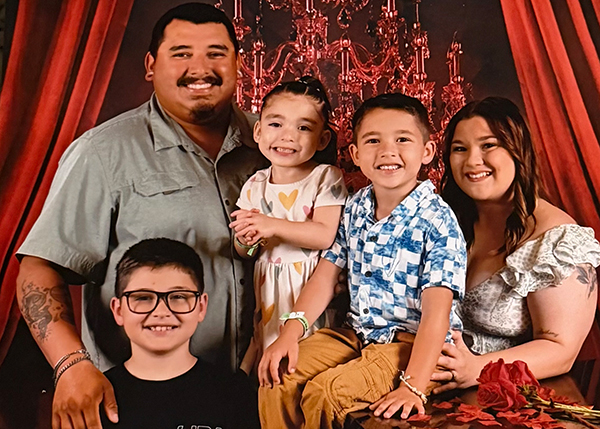
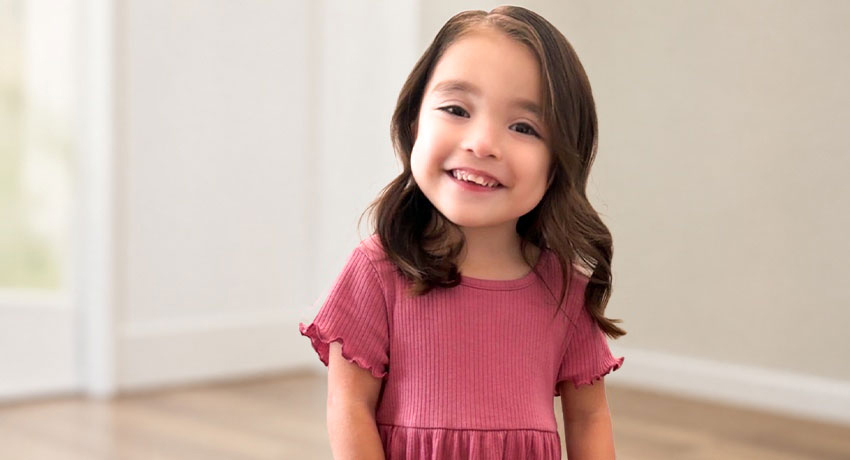
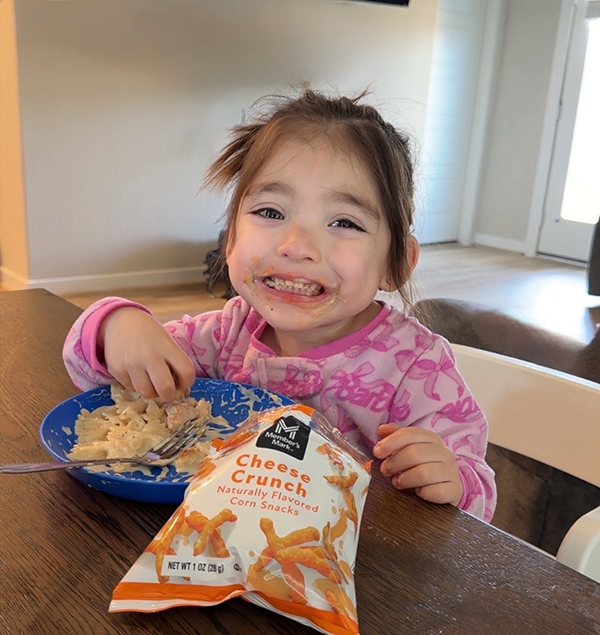
As a sassy, strong 3½-year-old, Callie Vazquez is far from the 2½-pound preemie who spent 135 days in the neonatal intensive care unit. Born at 26 weeks, Callie received nutrition through a tube in her stomach for most of her first three years. Today she sings, plays, and eats by mouth—milestones achieved through a coordinated care team, more than 10 specialists at UT Physicians, and dedicated parents supporting her with love.
“Whenever I feel like I’m going to break, I have to look at Callie to remember she’s the one going through the pain and seeing all these doctors,” said her mother, Destiny Vazquez. “She smiles through everything.”
An early delivery
Callie was born through emergency C-section on Memorial Day, but her due date was Labor Day. Destiny and her husband, Anthony, had a long road ahead with two other children at home.
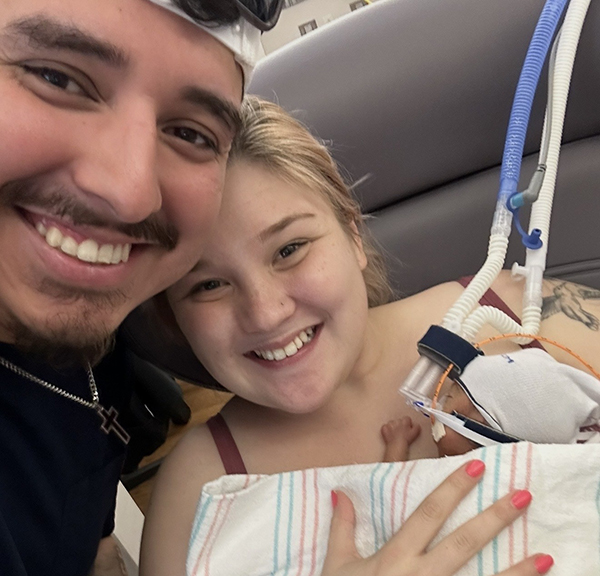
While Callie’s early care centered on helping her grow and develop in the NICU, doctors soon discovered two congenital heart defects: a patent ductus arteriosus (PDA) and ventricular septal defect (VSD). A PDA is an open blood vessel outside the heart that should have closed at birth. A VSD is a hole inside the heart between the two lower chambers.
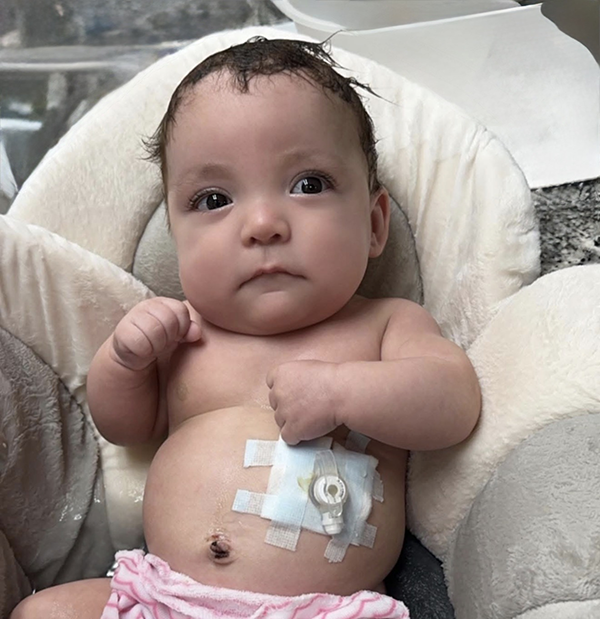
Closing her PDA was an important procedure in the NICU, but Callie’s challenges were not over. After surgery, swelling in her throat led to a temporary breathing tube. She developed significant feeding difficulties, refusing anything by mouth except her pacifier and aspirating when she did swallow. Those complications made a gastrostomy tube (G-tube) necessary, providing her nutrition when she went home Oct. 12 after nearly five months in the NICU.
“It was a relief bringing her home but also very scary, because she was protected in this little bubble with doctors around her all the time,” Destiny said. “The first week I didn’t get much sleep, because I was too worried.”
A team for every need
After discharge, the list of diagnoses grew. In addition to her heart defects, Callie had Marcus Gunn jaw-winking syndrome, a rare condition in which the nerves controlling the jaw and eyelid are abnormally connected. For Callie, this happened every time she sucked or chewed, which complicated feeding. Callie also had low blood counts, low muscle tone, and Jacobsen syndrome, which is estimated at 1 in 100,000 births.
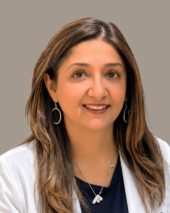
“Callie is adorable, but she’s a complicated little patient,” said Fatima Boricha, MD, a complex care pediatrician at UT Physicians Pediatric Center Neonatal High Risk Clinic, who cares for medically complex babies after they leave the NICU.
Boricha first met Callie’s family by telemedicine in early November. She coordinated care across a long list of specialists, including cardiology, genetics, neurology, hematology, ophthalmology, pulmonology, gastroenterology, and pediatric surgery along with physical, occupational, and feeding therapy and a dietitian. Boricha coordinated every referral.
Destiny appreciated Boricha’s efforts connecting her with specialists, advocating for them, and encouraging her on hard days.
“She describes everything the way we need—not as a doctor, but as a parent,” Destiny said.
With a more focused patient population, the Neonatal High Risk Clinic can provide longer visits and high-touch care. At the clinic, families have a chance to meet other members of their care team including a social worker and a dietitian. The clinic also has a psychologist and rotating GI, pulmonology, and BPD clinics in house. The core team providers meet at least weekly to review patient updates. Parents receive direct-line numbers and an after-hours phone line answered by a provider on call. Led by Ricardo A. Mosquera, MD, the clinic’s team, including Boricha, Tina Reddy, MD, and Janice John, NP, has cared for NICU graduates for more than a decade.
“Because we’re connected to the various specialists and know the goals they have for our patients, our clinic can offer a more comprehensive approach,” said Boricha, an assistant professor of pediatrics at McGovern Medical School at UTHealth Houston. “We work closely with other specialists at UT Physicians as one coordinated team, so families hear a consistent plan rather than piecing together advice from different providers.”
Learning to eat
As a toddler, Callie’s feeds continued through her G-tube. She started eating solid foods a bit but not enough to sustain her growth and nutrition. Boricha said feeding problems affect roughly a quarter to nearly a half of preterm infants, so feeding therapy is a big part of care for a preterm infant, especially for those with a G-tube.
“A good therapist matters a lot,” Boricha said. “It changes the trajectory and prognosis for the child.”
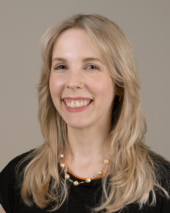
Callie was receiving some home-based feeding therapy, but Boricha believed she could progress more. She urged Destiny to try one visit with Alexa N. Gausman, a speech-language pathologist at UT Physicians High Risk Children’s Clinic, who focuses on infant feeding and swallowing.
At her first visit in May 2025, Callie touched the food on her tray but wouldn’t bring it to her mouth. Gausman identified three challenges: G-tube dependence, aspiration, and aversion to food.
Callie’s G-tube provided her nutrition while she practiced eating safely by mouth. Because she was a picky eater and had trouble swallowing, Gausman worked on both challenges at the same time.
“The only way to work on eating and swallowing is to eat and swallow,” Gausman said. “It’s a tricky place because we have to work on the picky eating but keep her airway safe at the same time.”
Every two weeks, Destiny brought one food Callie liked and one she avoided to feeding therapy. At first, success meant touching the food or tolerating it on the table.
Drinking proved even harder. Callie refused cups and aspirated thin liquids. Through practice with pacing, small sips, and slowing down, Callie gradually built the strength and coordination needed to drink safely.
Patience was essential. Gausman also modeled mealtime strategies for Callie’s parents, emphasizing positive language and experiences.
Graduating from the G-tube
In January 2026, Callie sat in a high chair next to her cousin, who was the same age. When he took a bite, she took a bite. When he drank, she drank. After he asked for more, Callie did also.
“The first time I noticed it, they were eating chicken nuggets, mashed potatoes, and corn,” Destiny said. “It was just crazy. I didn’t expect that to happen.”
As Callie ate more, Gausman, Boricha, and clinic dietician Joshua S. Werner determined how many tube feedings to hold back so Callie would feel hungry but still get all the nutrition. The family weighed Callie every week, and Boricha followed her closely to ensure she was getting essential nutrients. Slowly over the course of a few weeks, Callie stopped needing tube feedings, about eight months from her first visit with Gausman.
At Callie’s last visit with Gausman, she ate three bowls of cereal with milk. Gausman said she was having the time of her life.
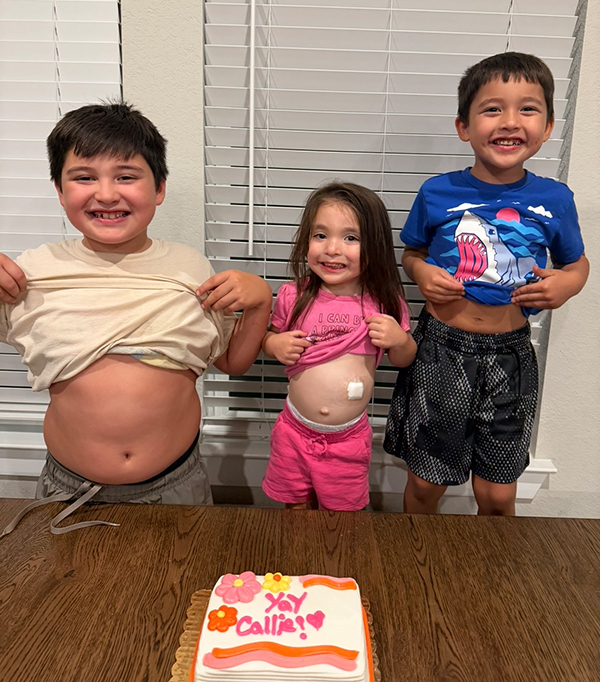
Callie’s G-tube was removed in July 2026, sooner than Destiny expected. She cried on the drive home as Callie achieved another milestone. She bought a cake and made a “G-tube grad” poster for the celebration.
A friend’s daughter, also born premature, still relied on her G-tube at age 7.
“I honestly thought Callie was going to need it for a very, very long time,” Destiny said. “Don’t compare your child. Your child will blossom and bloom when it’s his or her time. Stay strong and lean on your family.”
Callie is Gausman’s first patient to come off a G-tube completely and graduate from feeding therapy.
“This is why I do what I do,” Gausman said.