

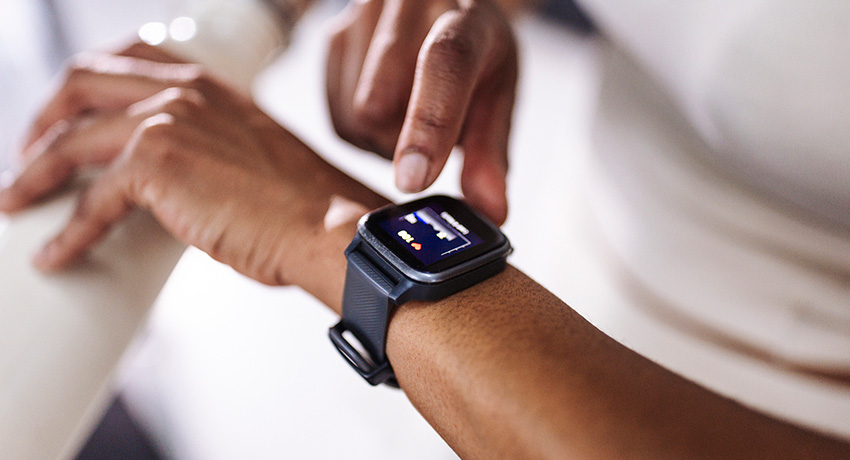
You wake up, glance at your wrist, and a number tells you how well you slept before you’ve had a chance to decide for yourself. Smartwatches and fitness trackers put heart rate, sleep scores, and step counts at our fingertips all day. But do they help us get healthier, or just give us stress and more to worry about?
What fitness trackers do well
Wearables do offer some clear benefits. One is how easily fitness trackers provide health information. You get instant biometric feedback, such as heart rate or sleep patterns, right on your watch. This objective data can be incredibly useful, often helping connect what we think about our health with what’s actually happening.

“Patients will say they barely get any sleep, but once we look at the data, they’re getting quite a bit more sleep than they expected,” said Jennifer Bahrman, PhD, a psychologist and assistant professor of psychiatry with McGovern Medical School at UTHealth Houston.
Many people also enjoy and find motivation in the gamification side of trackers. Step challenges with friends or colleagues add a social push to move more. Reaching daily personal targets to close activity rings on a tracker can feel like an accomplishment.
Many people also like the feeling of having something concrete to monitor and improve.
When tracking backfires
Problems arise when tracking becomes excessive. The biggest risk is hypervigilance by repeatedly checking throughout the day. It can become almost obsessive for some people, which leads to compulsive behavior.
Tracking can make normal fluctuations seem concerning. Bahrman said it’s normal to feel nervous at times and have changes in heart rate.
“When you look at the data, it’s going to show this,” she said. “And for some people that becomes really alarming.”
These devices aren’t medical tools, and they can be wrong. A loose band or a low battery can skew the numbers.
Comparison can also become a problem. Step challenges that start as motivation may leave some people feeling they’re falling short.
Signs that fitness tracking is becoming unhealthy
For people prone to anxiety, perfectionism, or health anxiety, tracking can become a source of stress. Bahrman said part of the hook is chemical. She said seeing your activity rings close feels good and triggers a dopamine high.
Bahrman suggested three warning signs to watch for:
More checking than usual. There’s no magic number. A nightly check of your activity rings may be normal for you, but an increase from your own baseline is a red flag.
Losing touch with your body cues. Relying on your tracker instead of paying attention to your own physical and emotional cues.
Mood tied to the numbers. One sign to step back is feeling like you’re having a bad day because you missed a target.
Tweaks for healthier monitoring
Bahrman suggested several tweaks to help control the barrage of data and manage expectations:
- Curate your dashboard. Show only the numbers you understand and that matter to you.
- Quiet the notifications. Limit notifications to once a day instead of receiving hourly reminders to move.
- Keep expectations realistic. Most of us hit around four to seven on a mood scale of 10 on most days. “Just because we’re not hitting 10 out of 10 doesn’t mean it’s a bad day,” Bahrman said.
- Ask how you feel. Needs vary. Some people feel rested after six hours despite not meeting the suggested eight. The bottom line is how you feel.
- Bring it to your provider. Use the data as a conversation starter, not a diagnosis.
Overall, it’s best to think of wearables as a tool, not a verdict.
“It’s not medical knowledge, it’s medical data we can use,” Bahrman said. “It can be very advantageous, but just like with anything, there could be too much of a good thing, as well.”