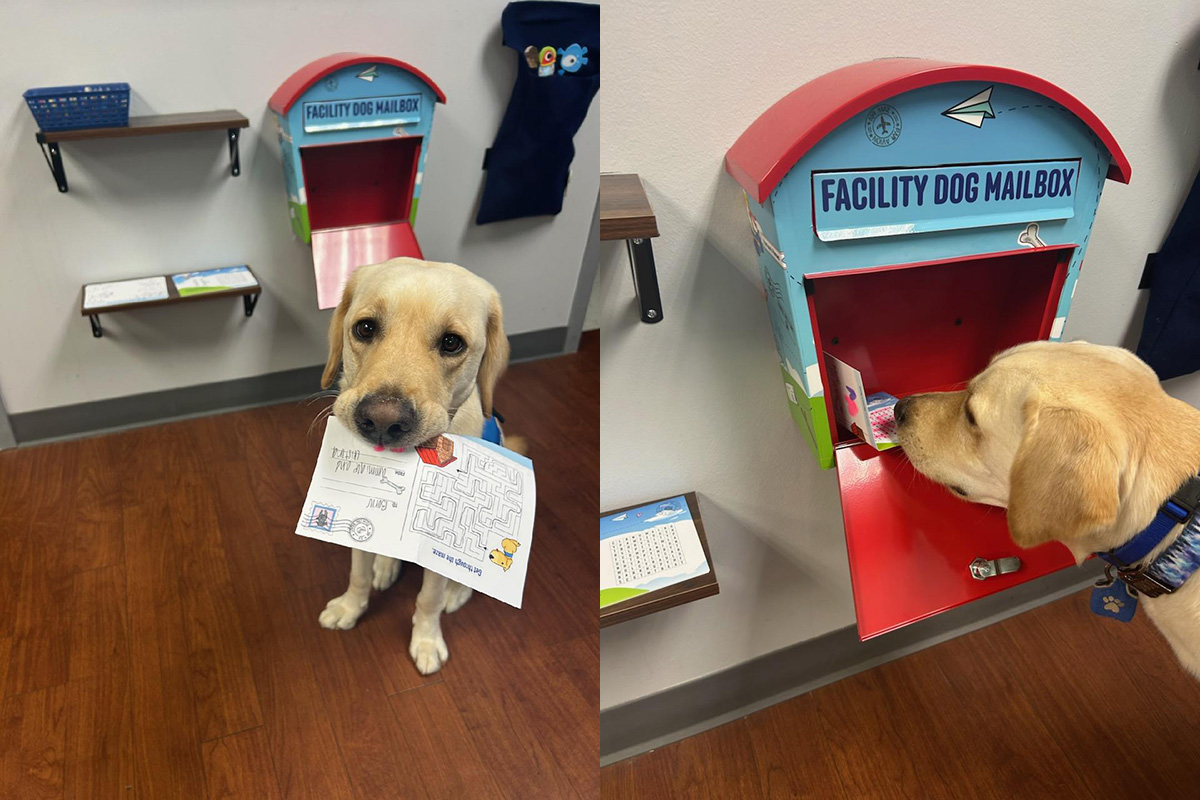

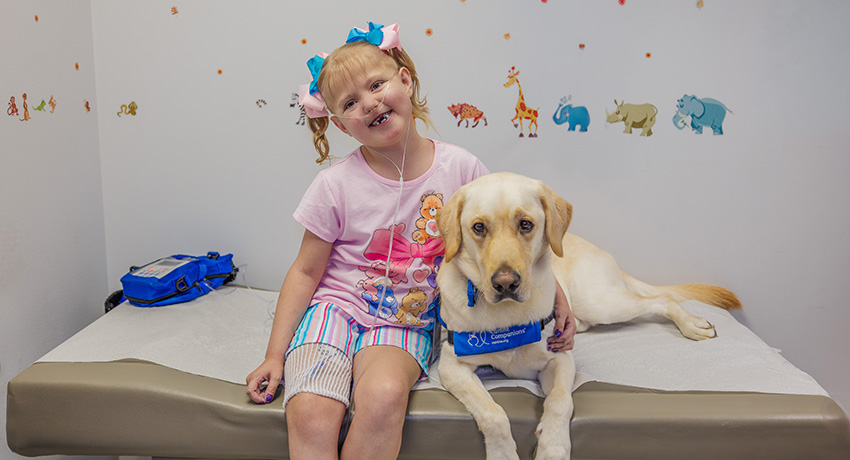
For many children, a trip to the cardiologist can feel overwhelming. Unfamiliar equipment, lengthy tests, and fear of the unknown can make even routine appointments stressful. At UT Physicians Pediatric Center Cardiology – Texas Medical Center, many of those patients get to meet Rachel Graves, MS, a certified child life specialist, and her specially trained facility dog, Boris.
Together, Rachel and Boris help children and their families approach medical visits with greater confidence, turning anxiety into curiosity and creating a more positive healthcare experience.
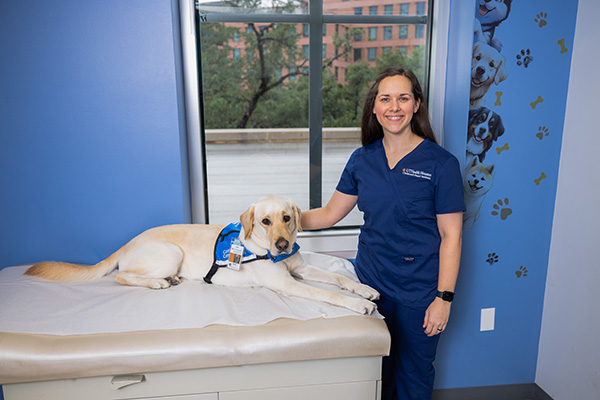
What is a child life specialist?
A child life specialist is trained to help children cope with illness, injury, and medical procedures.
“My role as a Child Life Specialist is to provide support for pediatric patients and their families,” Graves said. “I do that through developmentally appropriate education, play, and even exploring medical equipment to make it less scary.”
Meet Boris, the facility dog
One of Grave’s most valuable tools is Boris, a 3-year-old Lab/retriever mix with a soft coat and an eager disposition.
Unlike a volunteer therapy dog, Boris is a facility dog with advanced training to work alongside healthcare professionals in a clinic setting. Boris works full-time with Rachel and has mastered more than 35 commands to support children during medical visits.

“To us, Boris is a super dog,” said Andrew Abela, MHA, director of operations for UT Physicians Pediatric Center Cardiology – Texas Medical Center. “What he accomplishes is just amazing. He’ll lie on the floor with the patient or get on the exam table if the child is nervous. He can wear a mask during an exercise stress test and even walk on the treadmill.”
His specialized skills make intimidating medical equipment feel less scary. If a child is nervous about a device, Boris may hold it in his mouth or demonstrate how to use it, helping to reduce fear before the child’s turn.
“It tells the patients, if Boris can do it, so can they,” Abela explained.
Benefits for pediatric cardiology patients
Having a canine friend in the room is especially valuable during echocardiograms, one of the most common procedures performed in pediatric cardiology. Young patients are often asked to remain still for an extended period, which can be challenging.
“Boris can hold still and show patients how an echo actually happens, while the child holds the ultrasound camera on Boris,” Graves said. “Experiencing the test with Boris can help children better understand what’s about to happen and make the transition to their own exam much smoother.”
If children aren’t able to complete an echocardiogram during their visit, they often have to be scheduled for a sedated procedure, which can take more time and add costs.
“When we’re able to complete imaging the same day as their exam, we have a great plan of care in place, parents don’t have to schedule a second imaging appointment, and the greatest value is not having to sedate a pediatric patient,” Abela said. “Rachel and Boris are saving patients time and money.”
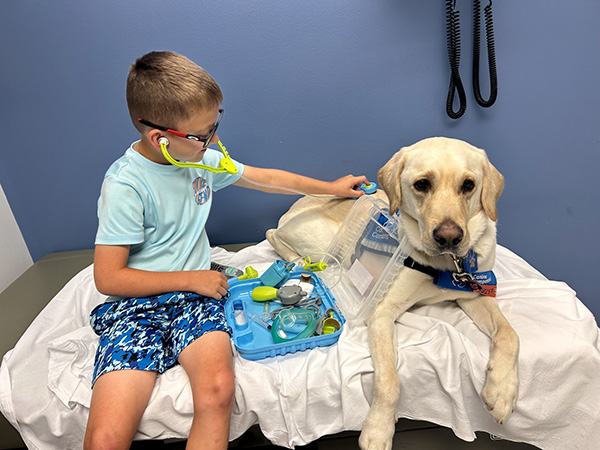
UT Physicians Child Life Program
Together, Rachel and Boris help children see medical visits differently. Whether demonstrating an echocardiogram, introducing unfamiliar equipment through play, or simply offering a comforting presence, the pair helps young heart patients build confidence one appointment at a time.
Check out this video of Boris visiting patients in the clinic and watch as his presence reduces stress and improves the quality of care.