

Preparing a meal for a crowd takes planning, from choosing the menu to making sure there is enough for everyone. Food safety deserves a place on that checklist, too.
Whether hosting a holiday dinner, bringing a dish to a potluck, or feeding a house full of guests, these four habits can help keep food poisoning off the menu.
1. Wash your hands, not raw meat
It may seem like rinsing raw meat makes it cleaner, but washing meat or poultry can spread germs. Skip the rinse. Proper cooking is what makes meat safe to eat.

“People wash their meat for good reason, to get it clean. Unfortunately, the splash-back from doing this can increase the spread of bacterial contamination to counters, sponges, and other ready-to-eat foods,” said Monique K. Dorsey, a registered dietitian with UT Physicians Multispeciality – Bellaire Station.
Instead, focus on washing hands with soap and running water for at least 20 seconds before preparing food and after handling raw meat, poultry, seafood, or eggs. Wash utensils and food preparation surfaces with hot, soapy water between tasks.
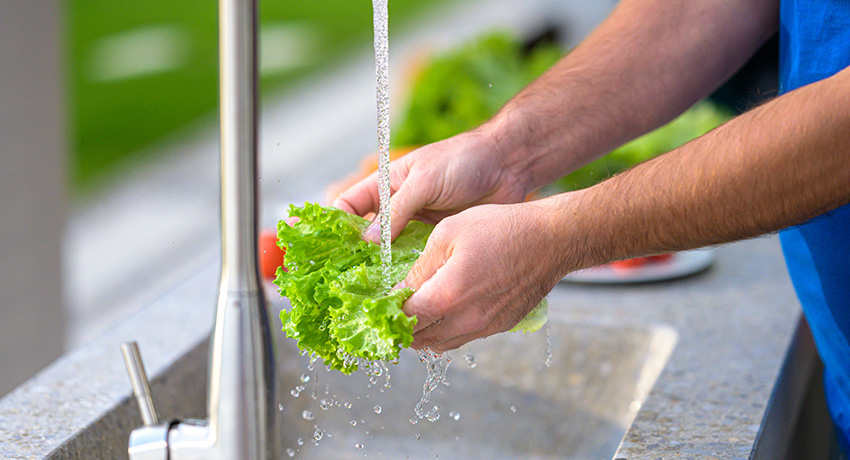
To clean fresh fruits and vegetables, rinse them before preparing or eating them. Don’t use soap or detergent on produce.
2. Use separate cutting boards for meat and vegetables
When several dishes are being prepared at once, it is easy to move from slicing raw chicken to chopping salad ingredients. But using the same unwashed cutting board or knife can transfer germs to foods that will not be cooked.
Use one cutting board for raw meat, poultry, and seafood, and another for fruits, vegetables, bread, and other ready-to-eat foods.
Wash knives, utensils, and cutting boards thoroughly after using them for raw meat. Use a clean plate for cooked food, rather than returning it to the plate that held it raw.
3. Use a food thermometer
Color alone won’t tell you whether food is safe. A browned turkey or a burger that looks done is not proof it reached a safe temperature. A food thermometer helps take the guesswork out of cooking.
“It’s important to cook raw meat until it reaches an internal temperature that will kill harmful bacteria. That temperature will vary depending on the type of meat,” Dorsey said.
Check the thickest part of the food, avoiding bone. Follow this guide for minimum internal temperatures:
- Chicken: 165°F
- Turkey: 165°F
- Stuffing and casseroles: 165°F
- Ground meat: 160°F
- Whole cuts of beef, pork, veal, and lamb: 145°F
For a whole turkey, check the thickest part of the breast and the innermost parts of the thigh and wing.
Watching the temperature doesn’t stop when the meat is done. During a buffet or extended meal, keep hot foods at 140°F or warmer and cold foods at 40°F or colder. Use a thermometer to check rather than assuming a warming tray or bowl of ice is doing the job.
4. Chill leftovers promptly
Don’t wait for guests to leave to put food away. Refrigerate leftovers within two hours of cooking or removing them from equipment that keeps them safely hot or cold.
Divide large amounts into small portions and shallow containers so they cool quickly. They don’t need to reach room temperature before refrigerating. Use refrigerated leftovers within four days or freeze them.
“Leaving food to sit out longer than two hours is a major risk factor for food poisoning. Bacteria grow very quickly between 40°F and 140°F,” Dorsey said. “This is referred to as the danger zone.”
Throw away perishable foods that have been left out too long. Refrigerating later doesn’t undo the risk of harmful bacterial growth.
Crowd-pleasing food safety
Before cooking begins, set out separate cutting boards, locate the food thermometer, and make space in the refrigerator for leftovers. A little preparation can help serve a meal that guests remember for the right reasons.