

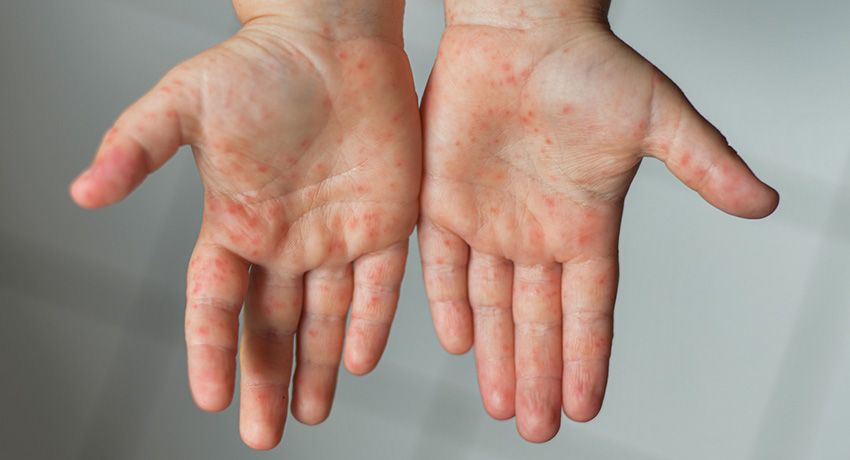
An itchy rash, blisters, and fever are the first signs of hand, foot, and mouth disease (HFMD). The highly contagious virus often arrives each fall with the return to daycares, preschools, and classrooms.

“It primarily affects infants and young children who are exploring and touching everything,” said Elva M. Almazan, NP, a pediatric nurse practitioner at UT Physicians Multispecialty – Sienna.
While the sight of sores on a toddler’s hand, foot, and mouth can illicit fear in parents and caregivers, Almazan says it can often look worse than it feels, and there are steps to mitigate risk.
What is hand, foot, and mouth disease?
Hand, foot, and mouth disease is a viral infection that usually starts with a mild fever and develops with a rash or blisters on the hands, feet, and around or inside the mouth.
“It’s one of the few infections where you can see sores on the soles of the feet and palms of the hand,” Almazan said.
Outbreaks are common when young children are in groups, playing together, putting toys in their mouths, sharing objects, and sneezing or coughing on high-touch surfaces. The viral infection most often affects children under 5, with caregivers, educators, and daycare teachers also susceptible.
The peak season for HFMD is late summer through early fall, when children return to indoor settings where they spend long hours together in close proximity.
What causes hand, foot, and mouth disease?
HFMD is caused by several viruses from the enterovirus family, most commonly coxsackievirus.
The virus can spread through these channels:
- Respiratory droplets, such as coughing and sneezing
- Saliva from talking, drooling, kissing, or sharing food and drink
- Fluid from the blisters or sores
- Stool
A person can also contract HFMD by touching a surface with the virus, such as door handles, countertops, and toys.
What are the symptoms of hand, foot, and mouth disease?
Symptoms of HFMD appear within the first three days following exposure and start with a mild fever followed by a rash or spots.
Early symptoms, Days 1 to 3:
- Mild fever
- Sore throat
- Reduced appetite
- Fatigue
Later symptoms, Days 4 to 7:
- Painful mouth sores, or ulcers
- Rash on hands and feet
- Rash on legs or diaper area
- Blisters within the rash area
The rash most commonly develops on hands, feet, and near the mouth, but can spread across the body.
The virus is most contagious during the first seven days.
“It’s important for infected individuals to avoid scratching the blisters, because the fluid contains the virus and will contribute to its spread,” Almazan said.
Treatment for hand, foot, and mouth disease
There is no antiviral medication to treat HFMD, so symptom management is key. Hydration is important because young children will often lose their appetite or refuse to drink if their mouths hurt.
How to soothe HFMD symptoms:
- Hydrate with water and electrolyte drinks
- Rest allows the immune system to recover
- Pain and fever relief with over-the-counter medication
- Soft, cool foods for eating
- Avoid citrus, salty, spicy, and crunchy foods
“This is a rare occasion when I recommend popsicles or frozen yogurt during illness,” Almazan said. “Especially for kids who are having a hard time drinking, make it fun for them with popsicles.”
With enough rest and proper care, HFMD usually resolves on its own within seven to 10 days.
How to prevent hand, foot, and mouth disease?
Preventing HFMD begins with strong cleanliness habits, such as:
- Hand hygiene: Wash with soap and water for at least 20 seconds after using the restroom and before each meal.
- Disinfect high-touch surfaces: Routinely disinfect toys, door knobs, light switches, counters, tables, cell phones, tablets, and TV remotes.
- Prohibit shared food and drink
- Cover coughs and sneezes: Teach children to use the inside of their elbow.
When should I see a doctor?
Complications can arise from severe cases of HFMD. It’s important to seek a medical evaluation if your baby, infant, or young child sustains a fever higher than 100.4 degrees.
Symptoms that can elevate the risk of complications:
- Signs of dehydration
- Less than three wet diapers in 24 hours
- No urination for eight hours in an older child
- No tears while crying
- Fever that lasts more than three days
- If blisters or sores last longer than 10 days
- All babies 6 months and younger need medical evaluation to monitor their weight.
- People who are immunocompromised
“This is a very common illness in children, and it will go away,” Almazan said. “The key to HFMD treatment is to manage symptoms and maintain cleanliness protocols to keep the virus from spreading.”