

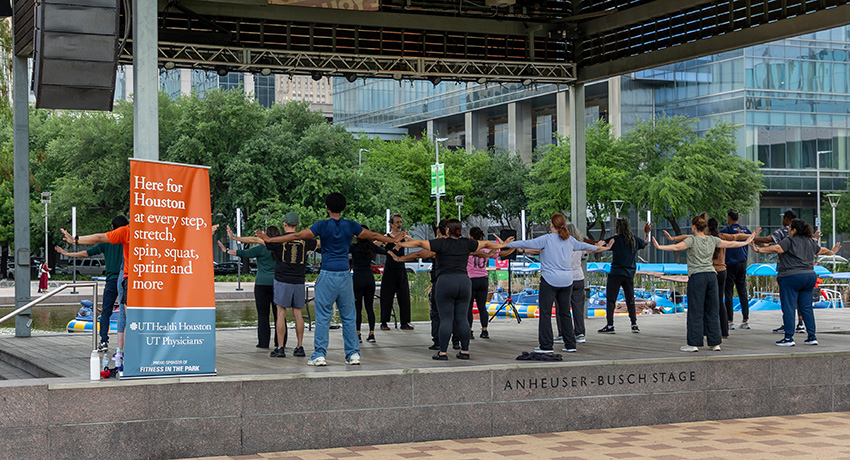
Unlike traditional yoga, which often involves holding poses, tai chi emphasizes continuous movement, flowing from one posture to the next. The result is a full-body practice that challenges balance and coordination while calming the mind. With roots in Chinese martial arts, tai chi isn’t new or trendy. What you learn today is essentially the same practice people have relied on for centuries — still benefiting the whole body, both physical and mental.
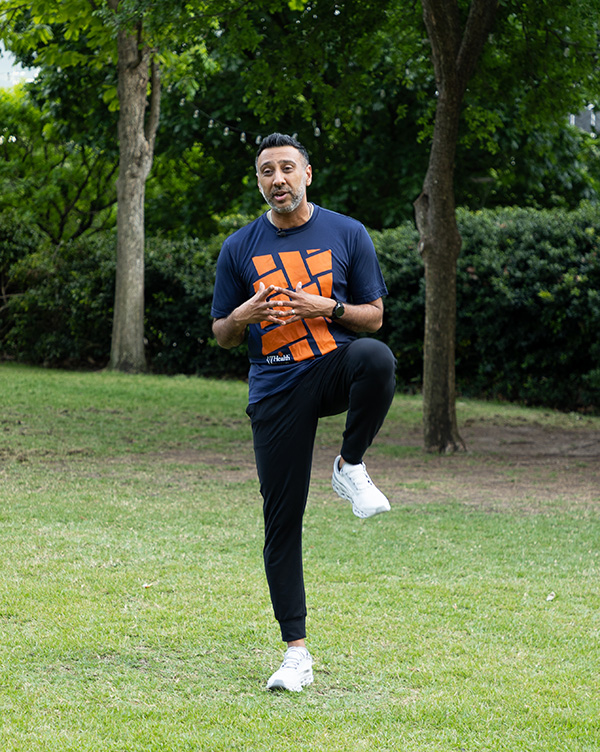
“Tai chi is actually one of the least intimidating exercises out there,” said Rehal A. Bhojani, MD, a sports medicine specialist at UT Physicians Orthopedics at Memorial Hermann | Rockets Sports Medicine Institute – Texas Medical Center. “Even when compared to yoga, the flexibility component is not as intense. Tai chi is meant to be much simpler.”
Helping muscles and joints
Tai chi offers benefits that few low-impact exercises can match from an orthopedic perspective. Bhojani shared four key areas:
- Joint mobility: Tai chi moves all the major and minor joints, helping preserve your range of motion as you age.
- Lean muscle: While it won’t bulk you up, it activates muscles throughout your body, which increases lean muscle mass over time.
- Balance and fall prevention: Improved joint awareness helps the body stay steady.
- Pain reduction: Research reveals tai chi reduces chronic lower back pain and knee pain from arthritis.
“Tai chi is a great formal workout for people who have osteoarthritis and even for those recovering from knee surgeries, like ACL repairs or total knee replacements,” said Bhojani, an associate professor of orthopedic surgery at McGovern Medical School at UTHealth Houston. “You can do this exercise long term.”
Impacting your overall health
The health perks of tai chi go far beyond the musculoskeletal system, with a surprising range of whole-body benefits. Bhojani detailed four ways tai chi can impact your health:
- Heart health: Tai chi can modestly improve aerobic capacity and lower blood pressure.
- Mental health: Studies show it lowers cortisol levels and improves heart rate variability, which translates to less anxiety, better mood, and better sleep.
- Cognitive function: Patients with mild cognitive impairment, early dementia, or Parkinson’s may benefit from the movement and concentration required.
- Immune function: Tai chi supports a healthy immune response, like most forms of exercise.
Bhojani said most beginners notice some result or improvement within two to four weeks, such as better range of motion, improved sleep, or greater body awareness. More measurable outcomes, like improved blood pressure or reduced fall risk, typically show up after two to three months of consistent practice.
Who can do tai chi?
Virtually every age can benefit from tai chi. Children as young as kindergarten age can do modified versions to support motor development. Adults of all ages can practice with few restrictions. Surprisingly, it may be most beneficial for older adults. In fact, the American College of Sports Medicine has specifically endorsed tai chi, along with yoga and Pilates, as an evidence-based practice for fall reduction.
“From an older adult perspective, it’s really recommended,” Bhojani said. “We know it prevents falls, helps with balance, and offers cognitive benefits.”
Better than walking?
While walking is a powerful exercise that can increase longevity and impact nearly every part of the body, Bhojani believes tai chi is better than brisk walking.
“Brisk walking builds the bigger muscles in the legs, while tai chi works on all the muscles in the body,” Bhojani said. “From an aerobic capacity, more difficult poses within tai chi definitely make you exert more energy than brisk walking.”
Just get started
For beginners, the American College of Sports Medicine recommends practicing tai chi two to three times a week for 20 to 30 minutes each. Over time, sessions can gradually extend to 30 to 45 minutes with smoother, more continuous movement.
Bhojani, who holds the Zlotnik Family Professorship in Sports Medicine, first experienced tai chi during his fellowship and found it humbling. His advice to beginners is simple: Don’t try to be a master on Day 1. Start with three to five movements, practice them until they feel natural, and build from there.
“Consistency and curiosity matter far more than perfection,” Bhojani said.
Ready to get started? Take advantage of no-cost tai chi classes each Thursday through June 25, as part of UTHealth Houston’s Discovery Green Fitness in the Park series.