

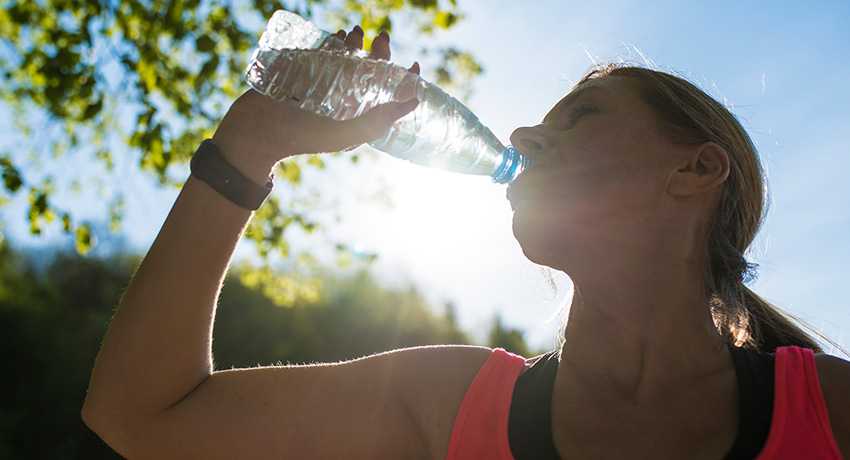
Training for a fall race in Houston means logging miles through intense summer heat and humidity. If you’re gearing up for the UTHealth Houston Half Marathon & 10K or another event, having a hydration strategy is just as important as a training plan.

“Humidity combined with the heat is what makes summer running in Houston especially challenging,” said Ryan S. Brown, DO, a sports medicine physician at UT Physicians Orthopedics – Cypress. “When it’s very humid, we tend to sweat more and lose more electrolytes, which can cause you to fall behind on hydration pretty quickly.”
Brown recommends drinking 16 to 24 ounces of water one to two hours before a run and a similar amount per hour while running. He also recommends replacing about 500 milligrams of sodium during or after your workout.
With a couple of marathons under his belt, Brown emphasizes the importance of having a hydration plan. That might mean carrying a handheld water bottle or planning longer runs on looped routes where water fountains or refill stations are available.
Signs not to ignore
Watch for these warning signs that you may be falling behind on hydration:
- Dark yellow urine or infrequent urination. Pale yellow or clear urine is generally a sign of good hydration.
- Dizziness or lightheadedness
- A pace that suddenly feels harder than it should for your usual level of effort
Brown has seen firsthand what can happen when runners don’t prepare. A few years ago, he encountered a runner at Memorial Park who had collapsed from heat exhaustion in the middle of the day. The runner had no water and no hydration plan. Brown and several bystanders helped him and called his wife for a ride home.
“Preplan, preplan, preplan,” said Brown, assistant professor in family medicine at McGovern Medical School at UTHealth Houston.
That means avoiding the hottest part of the day, generally between 10 a.m. to 5 or 6 p.m., and choosing routes with reliable access to water.
Electrolytes matter
Water alone isn’t always enough in Houston’s humidity. Sodium is the primary electrolyte lost through sweat, and some runners lose more than others.
“Everyone needs to replace those electrolytes back, not just water,” he said. “Otherwise, the water tends to go right through you.”
Individuals who finish a run with white salt streaks on their shirt or forehead may be what runners call a “salty sweater” and could need additional sodium replacement.
Sports drinks can help, but Brown notes that many are high in sugar and relatively low in sodium. Salt tablets and higher-sodium products designed for endurance athletes are often a better option during more serious training.
Beginning runners should be especially cautious, since they haven’t yet learned how their bodies respond to heat, sweat loss, and sodium depletion. Brown said that awareness develops with time and experience.
Adjust your expectations
Managing expectations can also help during summer training. Brown encourages runners to expect slower paces and lower mileage during Houston’s hottest months compared to spring or winter training. Most importantly, he said to give yourself grace.
“They say heat and humidity are the poor man’s elevation,” Brown said. “You’re stacking bricks now, and it’s going to pay off when the weather starts to cool. Even if you’re running slower than you’d like, you’re going to get there.”
Brown plans to run the UTHealth Houston Half Marathon & 10K himself this October after serving on the event’s medical team the past two years. His advice for Houston runners training through the summer: Stay ahead of your hydration, know your warning signs, and trust that the work you’re putting in now will pay off when fall arrives.