

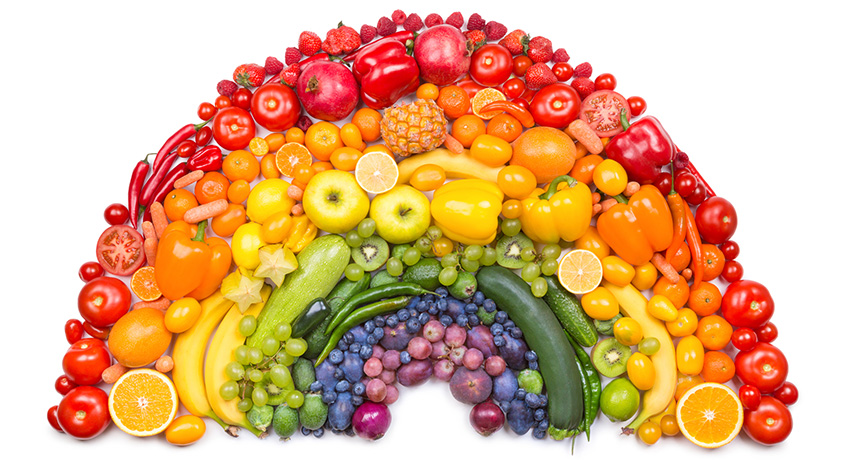
What does “eat the rainbow” mean?
More than just a colorful catchphrase, “eat the rainbow” is a dietary guide that means eating a variety of fruits and vegetables in different colors.
Whether you’re trying to eat healthier or entice a child to expand their palate, “eat the rainbow” is a fun way to help choosy eaters or remind busy adults of the importance of a colorful diet.
What’s the science behind “eat the rainbow”?
Fruits and vegetables are rich in phytonutrients, natural compounds that provide a range of health benefits, including powerful antioxidant activity, heart-health protection, and immune-boosting effects. Research on phytonutrients shows that plants of different colors offer distinct phytonutrients and benefits.

“Each pigment has a different health property and a different health benefit,” said Rupa Mahadevan, MD, a pediatrician with UT Physicians Pediatric Primary Care – Texas Medical Center. “When you eat a variety of colors, the body takes in a range of phytonutrients and receives more health benefits.”
Research also shows that a colorful plate can often enhance vegetable consumption in children.
“We know kids are more likely to eat fruits and vegetables solely from appearance. If they have a beautiful plate filled with fun colors, it makes it fun for them to try those foods,” said Mahadevan, an assistant professor in the Department of Pediatrics at McGovern Medical School at UTHealth Houston. “I find once children know how each color works differently in their body, they’re more open to eating those colors.”
Benefits of fruits and vegetables by color
Every color represents a different vitamin, mineral, and nutrient important for overall well-being.
“We know that 80% of chronic disease is nutrition-related,” Mahadevan said. “Eating a balanced, colorful plate will automatically provide vitamins and minerals to drive down cholesterol, diabetes, or improve heart health.”
While eating one color provides key nutrients, different colors often work together. Adding a variety of colors every day is the best way to get the greatest benefits.
- Red
- Key nutrients: lycopene and vitamin C
- Potential benefits: immune function, heart health, protects your cells from damage
- Examples: tomatoes, strawberries, watermelon, red bell peppers, raspberries
- Orange and yellow
- Key nutrients: beta-carotene, vitamin A
- Potential benefits: vision, healthy skin, and immune function
- Examples: carrots, sweet potatoes, oranges, mangos, peaches
- Green
- Key nutrients: folate, vitamin K, fiber
- Potential benefits: digestive health, gut health, bone health
- Examples: spinach, kale, broccoli, avocados, kiwi
- Blue and purple
- Key nutrients: fiber, polyphenols
- Potential benefits: brain health, heart health
- Examples: blueberries, blackberries, eggplant, purple cabbage, purple grapes
- White
- Key nutrients: allicin, indole-3-carbinol
- Potential benefits: healthy cholesterol, gut health, anti-inflammatory effects, antioxidants
- Examples: cauliflower, turnips, parsnips, radish, garlic, onions, white mushrooms
- Brown
- Key nutrients: B-vitamins, zinc, copper
- Potential benefits: anti-inflammatory properties, antioxidants, and immune function
- Examples: shitake mushrooms, potatoes
Simple ways to eat more color
The goal is to eat a variety of colorful fruits and vegetables every week, not necessarily every day. Consuming a few colors each day will provide rich health benefits.
“Start slow, try one or two new things a week to help build your new colorful diet and recipes,” Mahadevan said. “Include the whole family in these changes to make it more fun.”
How to eat more fruits and vegetables:
- Add a dipping sauce.
- Buy frozen produce, so it lasts longer.
- Use produce as the foundation for meals and snacks.
- Explore unfamiliar fruits and vegetables.
- Make smoothies.
- Pre-cut vegetables for easy snacking.
- Wash fruits and vegetables and keep them on the counter in easy eye-sight.
Common myths about fruits and vegetables
- Is frozen produce less nutritious?
- No, produce is picked at peak freshness and flash frozen to preserve nutrients.
- Is one color better than another?
- No, the goal is variety above all else.
- Do I need exotic superfoods for good health?
- No, eating a range of fruits and vegetables commonly available each week will provide substantial health benefits.
Make every color count
Eating the rainbow brings a child-like fun to fruits and vegetables, making buying and consuming produce relatable and attainable.
“Fruits and vegetables of different colors work in harmony to protect and promote good health. Eating a variety of produce every week is one of the most powerful investments you can make in your health, as good nutrition is among the most effective ways to prevent chronic disease.”
Embrace this colorful mindset with small steps each week to improve long-term health.