
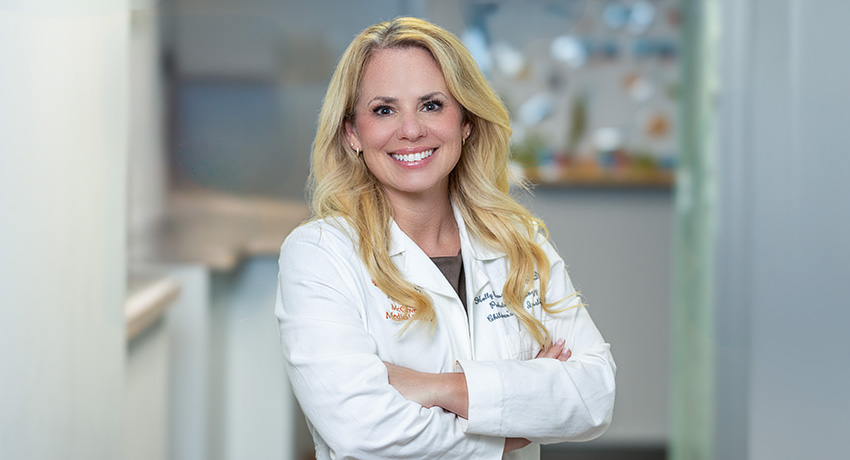
In 2016, pediatric cardiologist Holly D. Bauser-Heaton, MD, PhD, had just finished a long day on her feet caring for her young patients in Georgia when she began feeling faint.
Her symptoms: breathlessness, chest pain, and swelling. The seasoned physician-scientist checked herself into the emergency department, where she was quickly moved to an operating room for immediate life-saving surgery.
“I went to the emergency room and found out I was in heart failure. Had I gone home that day, surely I would have died,” said Bauser-Heaton, professor and chief of pediatric cardiology at McGovern Medical School at UTHealth Houston, where she holds the John P. and Kathrine G. McGovern Distinguished Chair.
A career dedicated to children’s hearts
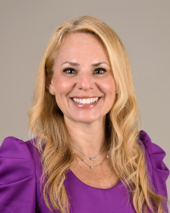
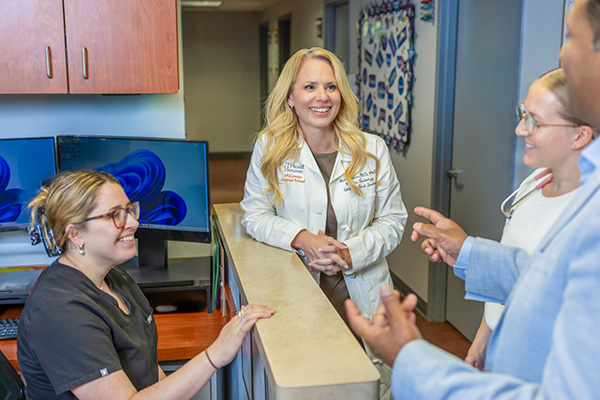
Now in Houston, as the recently appointed executive co-director of the UTHealth Houston Children’s Heart Institute, Bauser-Heaton approaches patient care with a perspective shaped by her own experience as a cardiac patient.
“My health journey helped me better understand patient limitations,” Bauser-Heaton said. “And I think the way in which we understand a family’s limitation is really important. That could be financial, emotional, and even healthcare literacy.”
As a nationally recognized leader in pediatric care, Bauser-Heaton built an extraordinary career spanning decades. She performs 250 to 350 procedures each year, holds multiple patents for cardiovascular device innovation, regularly speaks at international engagements, and has published more than 70 peer-reviewed articles.
Engrossed and devoted to her work, Bauser-Heaton failed to recognize her own limitations.
“This story is an important one, especially as a woman, because I ignored heart failure,” Bauser-Heaton said. “I was saying to myself, I must be tired or lazy. I was making all these excuses, but in reality, I was literally dying and didn’t realize it.”
From viral infection to pericarditis
Bauser-Heaton’s heart failure didn’t develop overnight. It began with a viral infection eight months prior. She contracted coxsackievirus, also known as hand, foot, and mouth disease, from a patient. The highly contagious virus can cause obvious physical symptoms: fever, blisters, and a rash. For Bauser-Heaton, the virus also infiltrated the lining of her heart, silently triggering a slow walk toward heart failure.
“I was feeling chest pain and was diagnosed with viral pericarditis,” Bauser-Heaton said.
Pericarditis is the inflammation of the thin sac-like lining that surrounds the heart. Symptoms of pericarditis include trouble breathing and sharp chest pain that worsens when lying down or taking deep breaths. Viral infections can cause pericarditis. It’s common in adults and usually clears up over time.
“After the rash on my hands went away, I thought I was cured of the virus,” Bauser-Heaton said. “I wasn’t worried about pericarditis because that was supposed to clear up, too.”
Heart failure symptoms
Months after recovering from hand, foot, and mouth disease, she began to experience odd symptoms.
“My legs were swollen, I had severe abdominal bloating, and I had such significant swelling of my neck internally that it was difficult to swallow food,” Bauser-Heaton said. “I was an avid runner and had to stop running.”
She was seeking answers from rheumatologists, oncologists, and other specialists, undergoing test after test with no clarity.
“No one circled me back to cardiology, and I was so debilitated I thought I had cancer,” Bauser-Heaton said.
Those external symptoms were masking a disease that was quietly progressing in her chest, constrictive pericarditis.
What is constrictive pericarditis?
Constrictive pericarditis is a chronic condition of the heart in which the thin sac-like lining around the heart becomes thick, scarred, and rigid. When the scar tissue becomes stiff, it compresses the heart, preventing it from functioning well. It’s a rare complication that can take months to develop.
As the disease progressed, it began to damage the heart muscle, developing into cardiomyopathy, making it hard for her heart to pump blood to the rest of the body.
“Cardiomyopathy is the destruction of the main cells of the heart muscle. While my heart was pumping blood appropriately, it could not relax and put me in heart failure,” Bauser-Heaton explained.
The diagnosis no doctor expects
Eight months after her initial diagnosis for pericarditis, Bauser-Heaton’s heart failure was so advanced that she couldn’t walk very far, she was always short of breath and could barely eat. She had developed restrictive cardiomyopathy.
She walked to the emergency department when her symptoms became so severe that she couldn’t sit down.
“I was so short of breath that I couldn’t breathe if I sat, so I spent the whole day standing,” Bauser-Heaton explained. “I went to the emergency room, and that’s when I found out I was in tamponade, which is life-threatening.”
Cardiac tamponade is a condition in which so much fluid accumulates around the heart that it can’t pump enough blood. The two top chambers of her heart had collapsed. Bauser-Heaton was in end-stage heart failure and rushed into emergency surgery.
“The signs of heart failure were there, but I just didn’t see them clearly. I had facial swelling, shortness of breath, no appetite, chest pain, and my feet were so swollen that I couldn’t put on shoes,” Bauser-Heaton said. “But I had no idea that I would have developed heart failure so many months after the initial inciting factor.”
What surprised her most as a patient
In the months after her surgery, Bauser-Heaton began looking at her own case through a scientific lens.
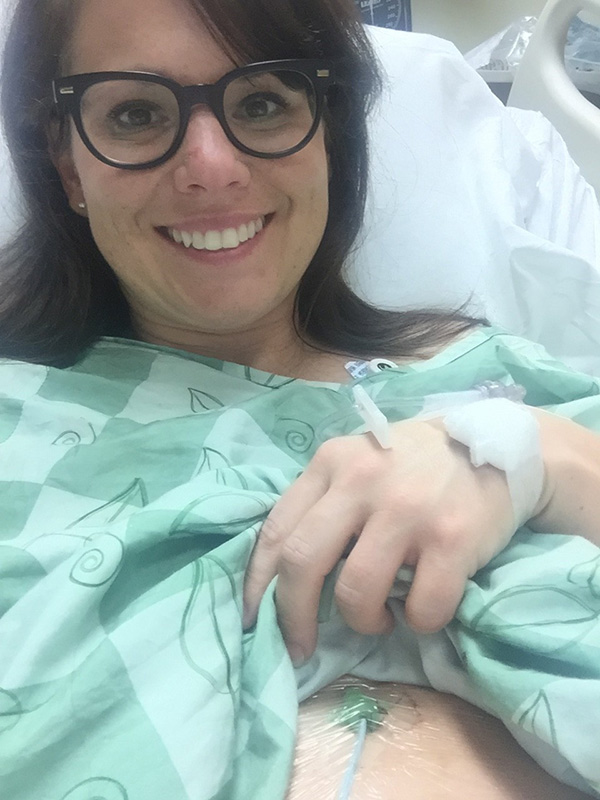
She had rounds of follow-up appointments, spent hours lying still during cardiac MRIs, and more hours undergoing the rigor of exercise tests. When it came time for cardiac catheterizations, she opted to forgo sedation so she could feel what her patients feel.
“I realize you feel every catheter movement through your heart. You feel flushes into your pulmonary arteries, you have reflexes like coughing and shortness of breath,” Bauser-Heaton said.
All of it opened her eyes to the subtle ways patients may experience discomfort in heart care, even in routine procedures.
Heart failure recovery journey
Bauser-Heaton returned to work within two weeks of surgery, and days after being released from the intensive care unit. A return to work, she calls far too soon.
“A huge lesson I learned through all of this is that it’s important to take time for your recovery journey. People need time for physical and mental recovery, especially for caregivers who need care themselves,” Bauser-Heaton said.
Her recovery has been a decade-long journey. It began with frequent medical exams, testing, and medication. As her energy levels increased over the years, so too did her physical activity.
“An important part of my heart failure therapy was cardiac rehab,” she said. “Slowly, but surely, I started exercising and gaining strength, which turned into a strict regimen of exercising every single day.”
Returning to pediatric cardiology with a new perspective
From knocking on the door before entering an exam room to the way she shares bad news, her experience as a patient showed her what it means to treat patients and families with dignity and empathy.
“I gained a huge amount of respect for what it feels like to have a sternotomy, to have chest tubes, to have a cardiac catheterization,” Bauser-Heaton said. “When I look at a patient and see we are keeping a chest tube in one more day, I work with my team to get it removed faster.”
Finding gratitude
Bauser-Heaton has spent the last decade reflecting on the life-changing experience of surviving heart failure.
While her recovery is less strenuous now, it continues. With each mile she runs, she is reminded of the enormous lessons she has learned about gratitude, self-care, and time. With each annual heart exam, she is reminded of the science, medicine, and technology that saved her life. And with each pediatric patient who walks through her door, she uses these lessons and reminders to make their quality of life that much better.
“I would never wish heart disease on anyone, but I look back at that experience, and I’m so happy it happened. It has made me a better cardiologist without a doubt,” Bauser-Heaton said.