On a quiet August afternoon, a storm-damaged oak tree finished what Hurricane Beryl started months before. Donald Alexander, 76, was working in the back of his two-acre property in Brazoria County outside Houston on a commercial-sized mower. As he navigated around damaged trees, his mower clipped the trunk of a partially fallen oak. The trunk released like a coiled spring and struck Donald’s left leg with the force of a battering ram, imagery he used to describe the blow.
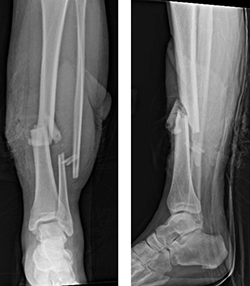
“I looked down and my foot was lying about six to eight inches off the side of my leg,” Donald said. His lower leg bones shattered and protruded through the skin. The impact had also stripped the skin from his lower leg, exposing the gaping wound.
A neighbor heard him cry out and called 911. Donald created a makeshift tourniquet from his belt to try to control the bleeding. He called his wife on his cell phone, and she came running across the property with suspenders and cinched them tight around his leg.
“I can still see the determination on her face,” Donald said. “She wanted to stop the bleeding, which was the best thing that ever happened to me. I would have probably bled out.”
A sheriff’s deputy arrived first, assessed the wound, and made a call for a medical helicopter. Emergency personnel arrived, stabilized Donald, and transported him to the landing zone, where the helicopter was in place. He arrived in Houston, and the UT Physicians trauma team was ready.
A limb-threatening injury
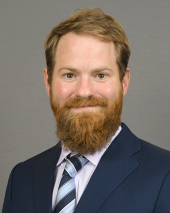
Only a three-inch strip of skin connected Donald’s foot to his body. Surprisingly, it preserved the nerves and blood supply, so he could move his toes — but the damage was severe. Patrick J. Kellam, MD, an orthopedic surgeon with UT Physicians Orthopedics Trauma Clinic, was candid about what the team was facing.
“This is a limb-threatening injury, and there is a significant risk of amputation,” said Kellam, an assistant professor of orthopedic surgery at McGovern Medical School at UTHealth Houston. “In talking to patients, I describe the worst-case scenario, so if it happens, they’re not surprised. Then they can only be happy when things go better.”
Kellam’s first priority was stabilization. He washed out the wound, placed an external fixator (pins and bars to hold the bones in alignment), and packed the area with antibiotic beads to fight infection. Over the next several days, the team monitored his injury. Damaged tissue can continue to die in the days following a traumatic injury, and the team needed to understand the full extent of the wound before proceeding.
Collaborating for success
Shortly after, Mohin A. Bhadkamkar, MD, a plastic and reconstructive surgeon with UT Physicians Plastic Surgery – Texas Medical Center and co-director of the Orthoplastic Limb Restoration Program, was also called in. His assessment was equally sobering.
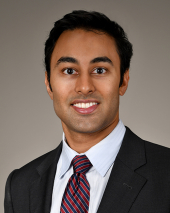
“The first thing that stood out was Donald might lose his leg,” said Bhadkamkar, an assistant professor of plastic and reconstructive surgery at McGovern Medical School. “Dr. Kellam and I both talked about that and how it may not be salvageable or successful. We were willing to give it a shot.”
The tight coordination between the two surgeons was no accident. Kellam and Bhadkamkar work within UT Physicians’ Orthoplastic Limb Restoration Program, a collaboration between orthopedic trauma and plastic surgery. This partnership, designed to bring both disciplines together for the most complex limb-threatening cases, was organized in April 2025.
“I just text Mohin and say, ‘I’ve got another one,’” Kellam said. “We have formed such a process with the orthoplastic limb reconstruction team that we can take a complicated patient with a complicated injury and get him to the finish line without stressing the system. It’s just what we do.”
The team coordinated a series of six surgeries in about two weeks — Kellam performed four and Bhadkamkar performed two.
Six surgeries, two teams, one goal
When Donald saw the extensive damage to his leg, he imagined a prosthesis would be his only option. Before his first surgery, Donald asked the surgeons in the room to pray for him. They gathered around him and prayed.
“It was amazing and blew me away. I believe God had his hand in that,” Donald said. “I was confident they had my best interest in mind when I said I’d like to save my foot. Though they didn’t look optimistic, it’s what they did.”
A week later, Kellam performed the definitive bone repair, inserting a rod through the center of the tibia to restore the bone’s structure and allow for eventual weight bearing. A fragment of bone with no remaining blood supply was removed, and an antibiotic cement spacer was placed in its absence, preserving the option to regrow bone later, if needed.
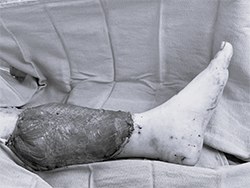
Timing was critical at this point. Kellam said the next step, a free flap reconstruction by Bhadkamkar, had to be performed within 24 hours of Kellam’s procedure to reduce the significant risk of infection. The following day, Bhadkamkar performed an 11-hour free flap reconstruction. Because the degloved skin had died from loss of blood supply, there was nothing left to cover the exposed bone and hardware. Bhadkamkar harvested a large muscle from Donald’s back and transplanted it to the lower leg, reconnecting its blood supply under a microscope using vessels measuring just 1.5 to 2.5 millimeters.
“We had to bring in tissue with a blood supply that could heal all the surrounding tissue, which is basically bringing in immune function and cells to that area,” Bhadkamkar said.
Five days later, he returned to place a skin graft from Donald’s thigh on top of the transplanted muscle.
“I think patients appreciate us being honest about what we can do, what the process is, and informing them every step of the way,” Bhadkamkar said. “A lot of times, it’s not just one surgery but multiple, like with Donald.”
A recovery that surprised everyone
Donald was discharged less than three weeks after his accident and transferred to an inpatient rehabilitation facility near his home. His wound therapist — a 17-year veteran of plastic surgery settings — told him he had never seen a reconstruction quite like it.
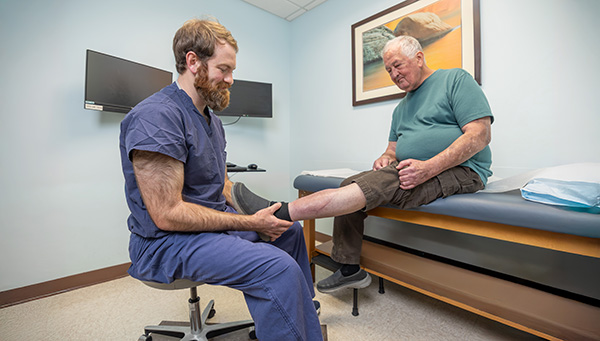
Doctors originally set an eight- to nine-month timeline before using his leg. The reality unfolded differently. Within weeks, Donald had progressed from walker to cane. He never needed a second rehabilitation facility. Two months after surgery, he was cleared to bear full weight. Shortly after, he stopped using the cane, too.
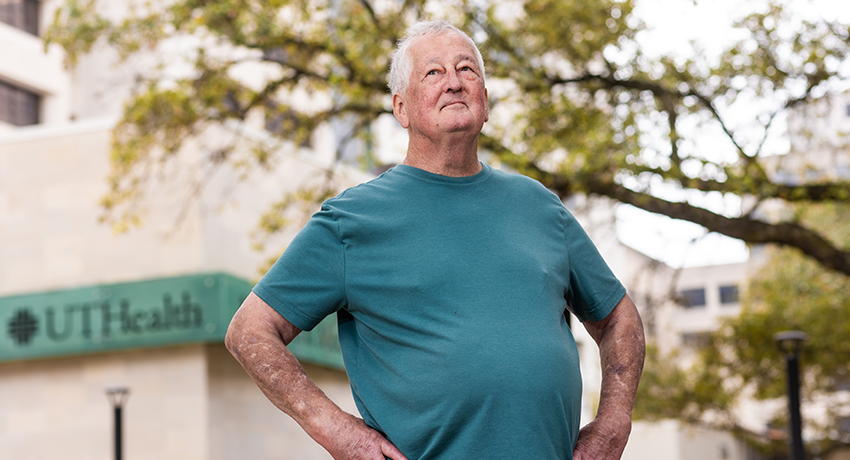
“Now I’m walking without any assistance,” Donald said. “It just happened so quickly, that they were able to do what I’m calling a miracle. I’m truly blessed.”
For Kellam, the outcome was beyond what the numbers predicted. Patients with this type of open tibia fracture face a 35% infection risk and a 10% amputation rate. Those rates are for all patients, not a 76-year-old managing diabetes.
“At every step, he should not have progressed to where he is,” Kellam said. “The fact that he’s had no complications and his bone is healing is phenomenal.”
Power of positive thinking
Both surgeons point to something beyond the operating room as a key factor: Donald’s mindset. Kellam referenced research showing that a patient’s belief in their own recovery on day zero is the single highest predictor of long-term success.
“He’s an exceptionally wonderful patient with a mental fortitude that not a lot of us have. Just a good outlook on life and everything is going to be OK,” Kellam said. “It’s good he had that mindset, because he was in a tough spot.”
Bhadkamkar agreed, noting that Donald was grateful and understanding at every step.
“We wish all our patients had his demeanor and positive spirit,” Bhadkamkar said.
Walking out the door
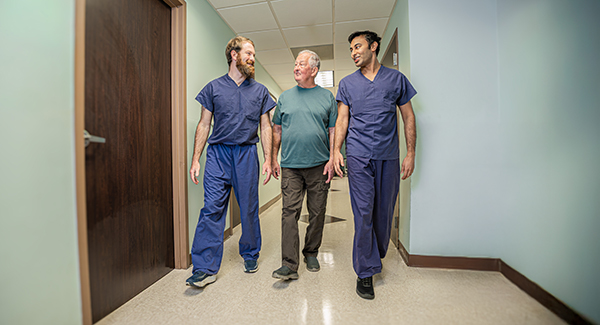
Today, six months after the accident, Donald is doing household chores, walking to his mailbox, and recently climbed a ladder. He rolls up his pant leg to show the scar to his friends and faith community, and they are consistently amazed.
He is proud of a lot of things — his wife’s quick thinking, the emergency infrastructure that got him where he needed to be, and faith that carried him through. But most of all, he’s grateful for a team that chose to try.
“I could have been dead — truly,” Donald said. “Or literally disabled. My surgeons took their skill and put it to work for me. I can’t understate how much that means.”
For Bhadkamkar, moments like Donald’s follow-up appointments are the reason the program exists.
“They walk in to our clinic and they walk out,” he said. “I think that’s the best gift that we get in taking care of these patients.”