
For the last 10 weeks of her pregnancy, Rosie Garza Lopez consumed dinosaur chicken nuggets, chocolate milk, and fried eggs – lots of fried eggs. Her son kicked every time she ate them, and she labeled them his favorite foods. Even knowing her son wouldn’t survive his rare genetic condition after birth, she was determined to give him everything he wanted.
“I learned that I am strong enough to do something I thought was impossible,” Rosie said. Thanks to the UTHealth Houston Fetal Center and UT Physicians Maternal-Fetal Medicine Center – Katy, the kindness, support, and genetic counseling expertise helped her navigate the difficult path. In a mixed blessing, this devastating outcome led to unexpected discoveries that changed her family’s future.
The pregnancy journey
Rosie and her husband, Jose, began their pregnancy journey with joy. After years of fertility treatments, Rosie became pregnant through IVF in September 2023. Their baby was thriving and growing well at every ultrasound. His parents gave him a name, bought him Christmas presents, and set up his crib. But at the 20-week anatomy scan, everything changed.
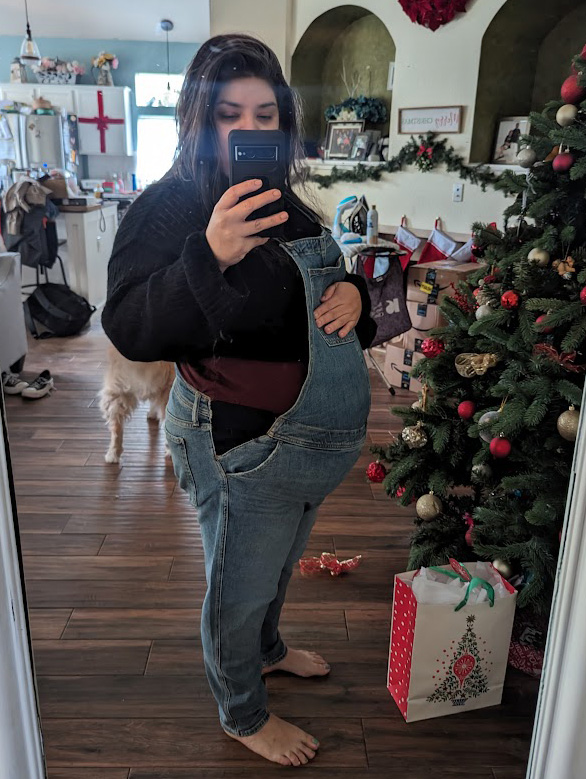
The ultrasound technician mentioned that Mateo seemed sleepy, since he wasn’t moving much, and his bladder was full. They scheduled a follow-up with a specialist at UTHealth Houston Fetal Center. Rosie thought getting images from a higher-resolution ultrasound was just a precautionary measure.
Instead, the specialist pointed out Mateo’s kidneys. Both were enlarged and filled with cysts. Almost no amniotic fluid surrounded the baby.
“He listened to me sob uncontrollably,” Rosie said.
The diagnosis was devastating: bilateral multicystic kidneys with anhydramnios. Without functioning kidneys, Mateo couldn’t produce urine. Without urine, there was no amniotic fluid. Without that fluid, his lungs and other vital organs couldn’t develop properly. The prognosis was heartbreaking: Mateo would not survive.
Rosie’s first instinct was to blame herself. She wondered if this outcome related to her having just one kidney. The doctor held her hands and said the situation was not her fault. “This will never be your fault,” he said. Even though Rosie doesn’t remember this doctor’s name, he guided her through this difficult moment with such grace.
A guiding light through the darkness
Within days, Rosie received a call from Aarti Ramdaney, CGC, a genetic counselor with UT Physicians Maternal-Fetal Medicine Center – Texas Medical Center and co-director of Prenatal Genetic Counseling. What followed was a partnership that would change not just Rosie’s journey, but her entire family’s understanding of their health.
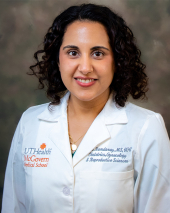
“Aarti literally had a conversation with me on the worst week of my life,” Rosie said. “And I was not nice, because I was so deep in grief.”
But Ramdaney met Rosie exactly where she was. She explained their options, including genetic testing, delivery planning, and support resources. She connected the family with neonatologists who helped them create a detailed birth plan focused entirely on Mateo’s comfort.
“She really was not just a genetic counselor,” Rosie said. “She was a counselor, a friend, and a person who knew what was going on at this intellectual level but also was just the kindest person.”
The UT Physicians team helped Rosie and Jose navigate 10 more weeks of pregnancy, knowing they would never bring their son home. Ramdaney checked in regularly, coordinated with insurance companies and doctors, and took on administrative burdens so the couple could focus on their son.
Ten weeks of love
Rosie and Jose decided to cherish every moment they had with Mateo. They dedicated 10 weeks to telling him how much they loved him and focused on his happiness and comfort. The couple, both Catholic, found strength in their faith during those difficult weeks.
“I was able to accept that I would not raise my son but would allow Mary, mother of Jesus, to raise him,” Rosie said. “I would pray to Mary, begging her to raise my son until I could get there.”
A precious hour and a half
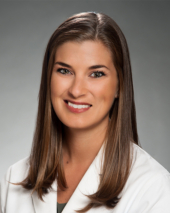
At 30 weeks, Rosie began having headaches and went to the hospital as a precaution. Doctors said she developed preeclampsia and recommended she deliver Mateo. On March 14, 2024, Mateo was delivered via cesarean section. Even though Ramdaney was out of town and the delivery was 10 weeks early, she coordinated everything. She sent a colleague, Blair K. Stevens, CGC, co-director of Prenatal Genetic Counseling and associate professor at McGovern Medical School, to collect the blood samples and placenta needed for genetic testing.
Doctors had prepared the couple that there was no way to predict how long Mateo would live — it could be an hour or a few days. Rosie and Jose had an hour and a half with their son. In an important ritual of their faith, the anesthesiologist baptized him. A dedicated and caring nurse stayed an extra shift through the night, taking photos and videos, honoring every moment.
“The only thing I ever felt for my son was love,” Rosie said. “He had a perfect life, because he was loved his whole life.”
A discovery that changed everything
A couple of weeks after Mateo’s birth, Ramdaney called with results from the whole genome sequencing. The diagnosis was unexpected: branchiooculofacial syndrome (BOFS), an extremely rare genetic condition that affects the eyes, skin, and possibly the kidneys. Mutations to one gene are responsible for causing the syndrome.
Puzzle pieces started falling into place as Ramdaney went through a detailed family history, asking questions around facial features, premature graying, skin findings, and facial weakness. Rosie responded repetitively to her questions: “No, I don’t have it, but my dad does.”
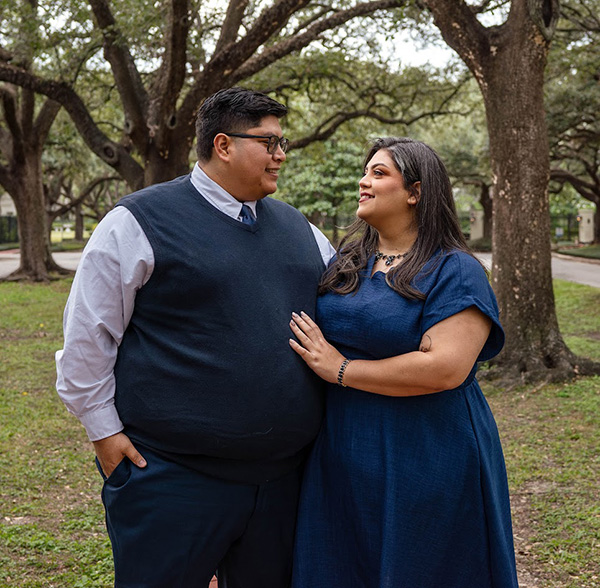
When Ramdaney sent Rosie the medical description of BOFS, complete with photos, Rosie immediately recognized her father. She said the picture of a little child looked like her dad in second grade. “They both have this same crooked smile,” she said.
The testing revealed that Rosie carried the BOFS gene, inherited from her father. Both had solitary kidneys — a symptom they thought was just an isolated quirk. Rosie’s father also had facial paralysis, adult teeth missing, and other symptoms that made sense after decades without answers.
Ramdaney coordinated testing for Rosie’s father, her sister, her aunt, and her uncle. She patiently answered questions and guided each family member through the process.
“My entire family has now worked with Aarti at some level,” Rosie said.
The discovery was particularly crucial for Rosie’s sister, who was pursuing IVF to have a second child. With the BOFS diagnosis, she was able to test her embryos with Ramdaney’s guidance. Ultimately, she and her husband decided not to have another child and felt blessed with their one daughter.
Why genetic counseling matters
While whole genome sequencing is still relatively new in prenatal care, the maternal-fetal medicine and UTHealth Houston Fetal Center team is an early adopter of this comprehensive testing. It required careful coordination, collecting samples from Mateo, Rosie, and Jose, then building a probe to identify the specific genetic variant.
“It’s amazing to think how one single letter different than what we expect can have such a profound impact on fetal development,” Ramdaney said. “And it can present so differently from family member to family member.”
Beyond the genetics, the emotional and mental support that genetic counselors provide is invaluable — and often not talked about.
“Our role was important regardless of testing decisions — making sure we could advocate for Rosie, provide guidance on prognosis, and smooth out all those puzzle pieces so they could focus on their time as a family,” Ramdaney said.
A family affair
What made Rosie’s case unique was how the diagnosis rippled through her family, providing answers for symptoms spanning multiple generations.
“Even though our initial expectation was really for Rosie’s nuclear family, it actually spiraled from there and had a significant impact on multiple extended family members,” Ramdaney said.
A path forward
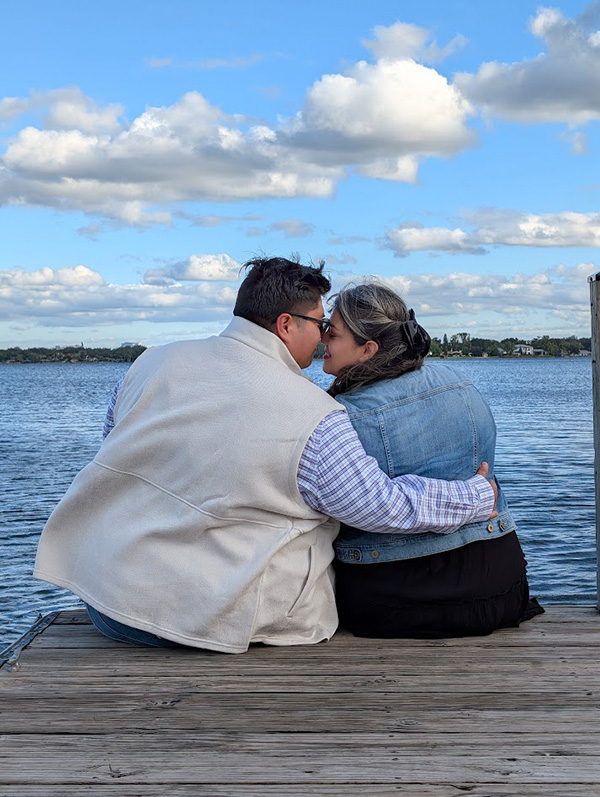
For Rosie and Jose, the genetic diagnosis provided something invaluable: a way to have more children safely. Ramdaney helped them test their remaining IVF embryos for BOFS. The couple has five healthy embryos now.
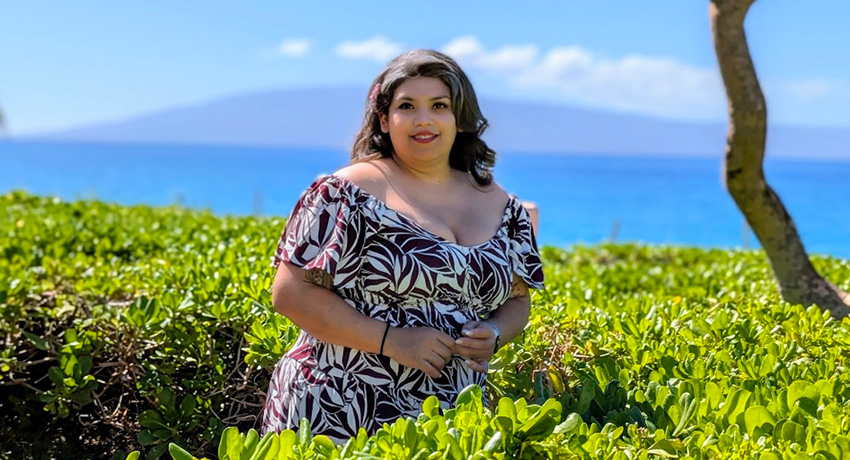
After a miscarriage in November 2024, Rosie and Jose took 2025 to heal — mentally, physically, and emotionally. They focused on taking care of each other, loving each other, and doing things that made them happy. Part of that included a trip to Hawaii in November 2025, which is Jose’s happy place. Rosie said it makes him feel most himself, and she loves that version of him.
“A lot of what I focused on during that trip was learning to enjoy the season of life I’m in,” Rosie said. “I have a beautiful life, a loving husband, and I had a perfect son. I might be lucky enough to have another, but if not, this season of life has a lot of blessings.”
The couple plans to undergo another embryo transfer in early 2026.
A message of strength
After her experience, Rosie encourages couples to seek genetic counseling and accept support when offered. She wants other families facing similar heartbreak to know they’re not alone.
“Don’t close in on yourself,” Rosie said. “There are people who can guide you, and they are a gift. There is so much help available.”
Most importantly, she wants families to know that love matters, even when outcomes aren’t what we hope for.
“There’s still joy and so much love, even in this process,” Rosie said. “This experience is valid. You are still a parent. This is still your child.”