

Studies show female athletes are two to eight times more likely to tear their ACL than male athletes, and a first tear raises the odds of a second. Koryn Johnson, now 21, became part of that statistic twice, tearing an ACL in each knee and returning to volleyball both times. She refused to let two ACL tears end her story—with help from the orthopedic surgeon she still calls her hero.
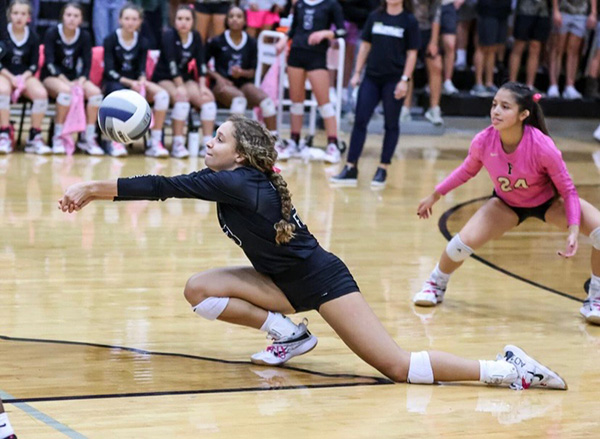
Koryn started playing volleyball in seventh grade, mostly because her older sister played. By eighth grade, something shifted, and volleyball became her world.
In the middle of preseason before her senior year in high school, a blocker landed on Koryn’s foot as she moved backward. Her leg didn’t follow. She felt a pop, her body froze, and she immediately went to the ground.
An X-ray came back clear, but her coach and trainers suspected something worse. A few days later, her coach said it looked like an ACL tear.
“I lost it and don’t think I’ve ever cried that hard,” Koryn said. “I’d heard horror stories about ACL injuries being career-ending for a lot of women. I was heartbroken.”
Learning her prognosis

Koryn’s athletic trainer connected her with Bonnie P. Gregory, MD, an orthopedic surgeon with UT Physicians Orthopedics at Memorial Hermann | Rockets Sports Medicine Institute – Texas Medical Center, who had cared for athletes at Koryn’s high school for years. Gregory remembers meeting Koryn for the first time when she had to deliver hard news. Koryn, in the middle of the college recruiting process, needed surgery and would likely be out of her sport for nearly a year.
“It’s a really hard conversation to have, especially for athletes like her who were planning to go to the next level,” said Gregory, also an assistant professor of orthopedic surgery at McGovern Medical School at UTHealth Houston.
Koryn admitted she was terrified when she heard she needed surgery—of not walking the same or never playing sports again.
“That was my worst nightmare. I’ve never not played a sport,” Koryn said. “I was losing way more than my ability to walk for a couple of months.”
Performing ACL reconstruction
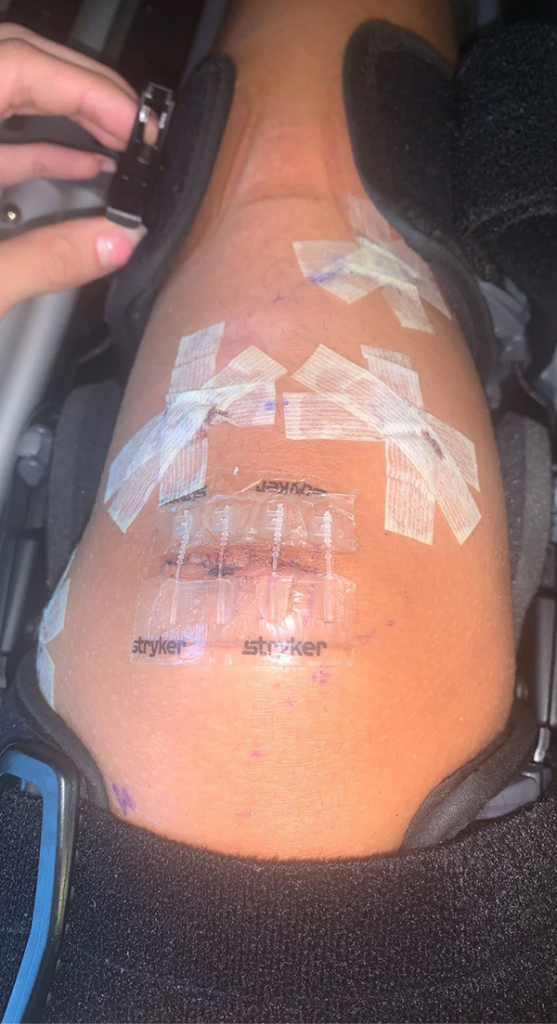
A few weeks later in September 2022, Gregory reconstructed Koryn’s left ACL using a graft from her quadricep tendon and repaired her meniscus, as the two injuries often occur together. Physical therapy started the next day. Gregory said early muscle activation around the knee helps make recovery more predictable.
Koryn attended early mornings with her school athletic trainer five days a week and twice-weekly sessions with a physical therapist who coordinated closely with Gregory. She was grateful for the close relationships and collaboration within her care team and was cleared to return to play after about eight months.
The physical recovery was demanding, but Koryn said the biggest battle was mental. As she relearned basic movements, like walking, she had to overcome the fear of getting hurt again.
As captain, Koryn stayed on with her high school team, even though she wouldn’t be able to compete. She didn’t want to let her team down.
“Watching her go through the isolation she felt from the team was very hard,” said her mother, April Johnson. “She pushed herself so hard to come back and practice with her club team. She has the heart of a fighter and the soul of someone who believes in something greater than herself.”
Despite getting back to volleyball, Koryn had decided she didn’t want to play in college. April and her coach messaged college coaches anyway, and she was invited to a college visit. She committed to play at Midwestern State University in West Texas.
A second ACL tear
Female athletes who tear one ACL face a higher risk of tearing the ACL in the opposite knee. Gregory said these injuries are more common in young female athletes for several reasons:
- Anatomy: Female knees are more likely to have knee valgus, or be knock-kneed, and have a narrower notch where the ACL sits.
- Hormonal: Hormonal changes happen through the menstrual cycle that put the ACL more at risk of tears.
- Neuromuscular control/strength training: Differences in muscular control during jumping, cutting, and pivoting activities, as well as less emphasis on strength and jump training in young female athletes, increase ACL injury risk.
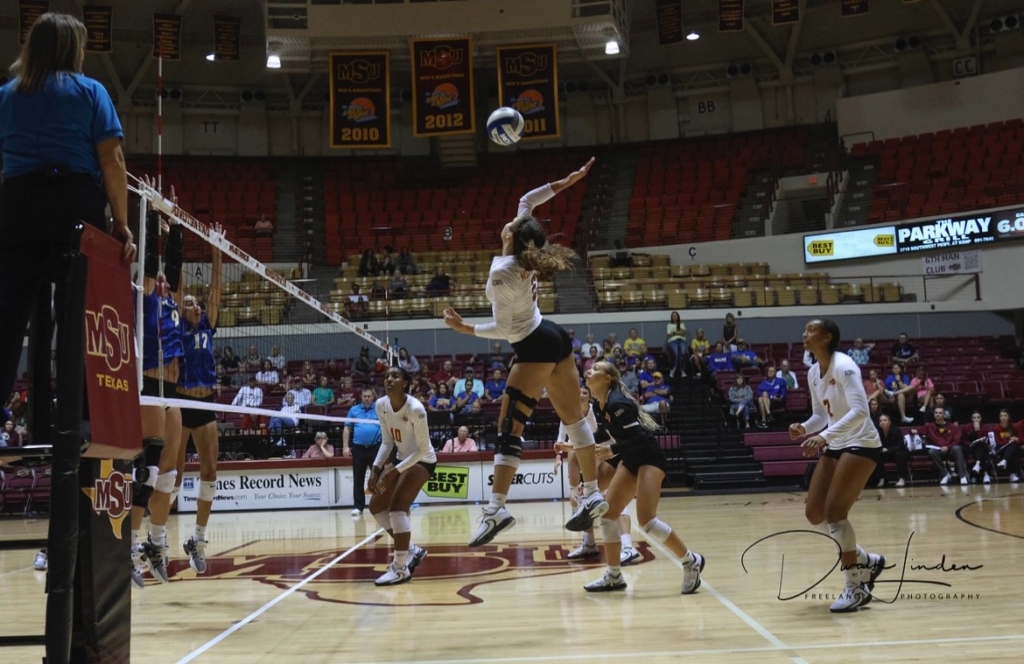
Even though Koryn had passed every strength and movement test after her first recovery, the odds caught up with her. Three years later, during a game in West Texas, Koryn went up for a hit and felt the same unmistakable pop in her other knee. She knew immediately what it was this time.
The idea of having to relive another surgery and recovery on her right knee overshadowed Koryn’s pain for a while. Her college training staff recommended a local surgeon, but Koryn and April were adamant they were working with Gregory in Houston.
“She was absolutely amazing, and that’s exactly why I had to have her again for my second surgery,” Koryn said. “I knew I had to get the best care if I ever wanted to get back at it again.”
Navigating a second surgery
In her second ACL surgery in April 2025, Gregory did an ACL reconstruction with her quadricep tendon and repaired tears on both sides of Koryn’s meniscus. She also added a newer procedure, a Lateral Extra-articular Tenodesis. This extra step uses part of the IT band to add stability and reduce rotational stress on the knee. Gregory’s team has increasingly offered this new surgical option to younger, elite athletes to help lower the risk of another tear.
April recalls the extraordinary measures that Gregory and her office used to schedule surgery, follow-up appointments, and evaluations around Koryn’s college schedule.
“These were not small tasks,” April said. “Our family greatly admires Dr. Gregory, and we have absolute faith in her and her staff.”
Koryn leaned on the same things that carried her through the first time: her faith, her family, and a physical therapy plan built around her goals.
Following data-driven recovery
The second time around, Koryn participated in UTHealth Houston’s Walter R. Lowe Knee Registry, which collects recovery data from patients undergoing knee surgery. The program, which started after her first surgery, has tracked outcomes from nearly 2,000 knee procedures, helping surgeons track recovery and study ACL outcomes. Gregory is one of seven UTHealth Houston orthopedic surgeons participating in partnership with physical therapy specialists.

“We send patients through a battery of tests to look at range of motion, strength, movement—like jumping, moving, cutting—to better understand how patients are actually doing after these surgeries,” Gregory said. “By six months out, Koryn was already testing above 90% on strength and movement benchmarks.”
Koryn was cleared to return in October and played a full six-on-six practice that same day. She described returning to the court as pure joy.
“It was uncomfortable and challenging, with a lot of tears,” she said. “But it’s rewarding. I did it!”
Gregory estimates roughly 75% of athletes return to their sport after a first ACL reconstruction, and even fewer after a second.
“It’s certainly a testament to Koryn’s desire, her grit, and her resilience that she was able to go back after not one, but two, ACL procedures,” Gregory said.
Life after volleyball
Koryn graduated from Midwestern State University in three years, in May 2026, and chose not to pursue another season of eligibility. She recently started a master’s program in accounting.
Looking back, she credits her recovery to the people around her—coaches, trainers, physical therapists, friends, family, and a surgeon she still calls her hero—in addition to her own dedication.
“Dr. Gregory is Wonder Woman, and the reason I walk today,” Koryn said. “She encouraged me and inspired me just by her everyday life. She’s the reason I was able to play my sport, and the reason I was able to be happy.”