

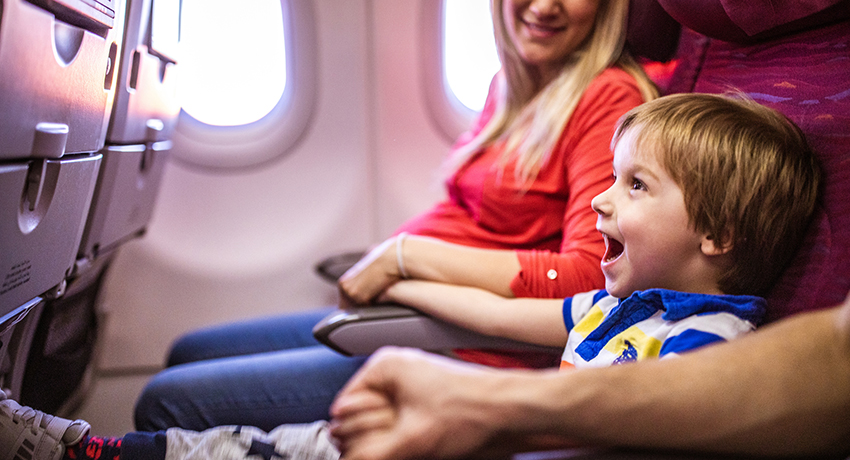
While summer vacation plans can spark excitement, many parents feel anxious about flying with kids. Managing the frequent ear pressure issues in young passengers while juggling additional travel gear can overwhelm even prepared parents. Navigating air travel calls for planning, managing expectations, and patience.
Why kids struggle more with flying

It’s not uncommon for babies to cry during airplane travel. Underdeveloped eustachian tubes in their ears are the primary reason they experience discomfort while flying. Their tubes are shorter and more horizontal than adult tubes, making them more prone to becoming blocked as cabin pressure changes. This anatomical difference means that children under 2 are particularly susceptible to ear pain during descent of a flight, often leading to crying that can be difficult to soothe.
Kristine O’Connor, MD, a pediatrician at UT Physicians Pediatric Primary Care — Texas Medical Center, explained this common occurrence.
“For young kids, especially those under 2, their eustachian tube can’t neutralize the pressure as well as an older child or adult,” said O’Connor, an assistant professor of pediatrics at McGovern Medical School at UTHealth Houston.
Managing ear pressure
To help children cope with ear pressure, parents can encourage swallowing during descent. For younger children, sucking on a pacifier or feeding from a bottle or breast might open up the eustachian tube. O’Connor said this can help equalize the pressure. For older children, chewing gum can be helpful during descent.
“If they have a cold, allergies, or a recent ear infection, it might be very painful for all ages when the plane is decreasing altitude,” she said.
Around age 5, children’s eustachian tubes begin to mature, making air travel somewhat easier.
Planning for the ages
Some vacation destinations can be challenging depending on the child’s age, personality, or needs. A busy amusement park might be hard to navigate with a 2- or 3-year-old, but the same vacation can be a pleasant experience when the child is a few years older. O’Connor’s approach to family travel focuses on realistic planning and expectations versus ambitious dreams.
“There’s fantasy versus reality,” O’Connor said. “I want parents to sit with the idea of why they want to do this trip. Is my child developmentally ready?”
Overplanning is not recommended with young children. Keep the schedule light to leave space for any unexpected events. Young kids also need frequent breaks and naps.
5 tips for smoother family travel
O’Connor shared five tips for families making air travel plans.
Prep for the trip
Visit your pediatrician before traveling to ensure vaccinations are current. It’s also helpful to discuss special considerations for international travel. Some destinations might require additional medications, such as malaria prophylaxis or immunizations. For children traveling internationally or to areas with ongoing outbreaks, measles immunizations can be given to infants as young as 6 months old.
Book smart
Choose direct flights, when possible, and avoid very early departures.
Involve your children
For school-age children, start talking about the trip early. Let them be part of the plans. Ask them what they would enjoy doing with specific options.
“The kids will be excited planning some of the activities with you,” O’Connor said.
Keep safety in mind
Keep young children out of aisle seats to prevent them from causing potential obstructions or receiving injuries. Window and middle seats are best to contain young children who might be squirmier than older children.
Plan ahead
Before getting on the airplane, make sure everyone has been to the bathroom and is well fed. Bring any special comforts, such as a stuffed animal or blanket. Prepare for potential delays with extra diapers, wipes, snacks, and water.
Remain flexible
Flying with young kids requires preparation, patience, and flexibility. While the challenges are real — particularly for children under 2 — they’re manageable with the right approach.
With proper planning and realistic expectations, family air travel can be a positive experience with many special memories.