Alert!

There has been an error in displaying this message. Please contact the site administrator.

News & Articles

UTHealth Houston Research

July 5, 2023
Written By: Caitie Barkley | Updated: July 5, 2023
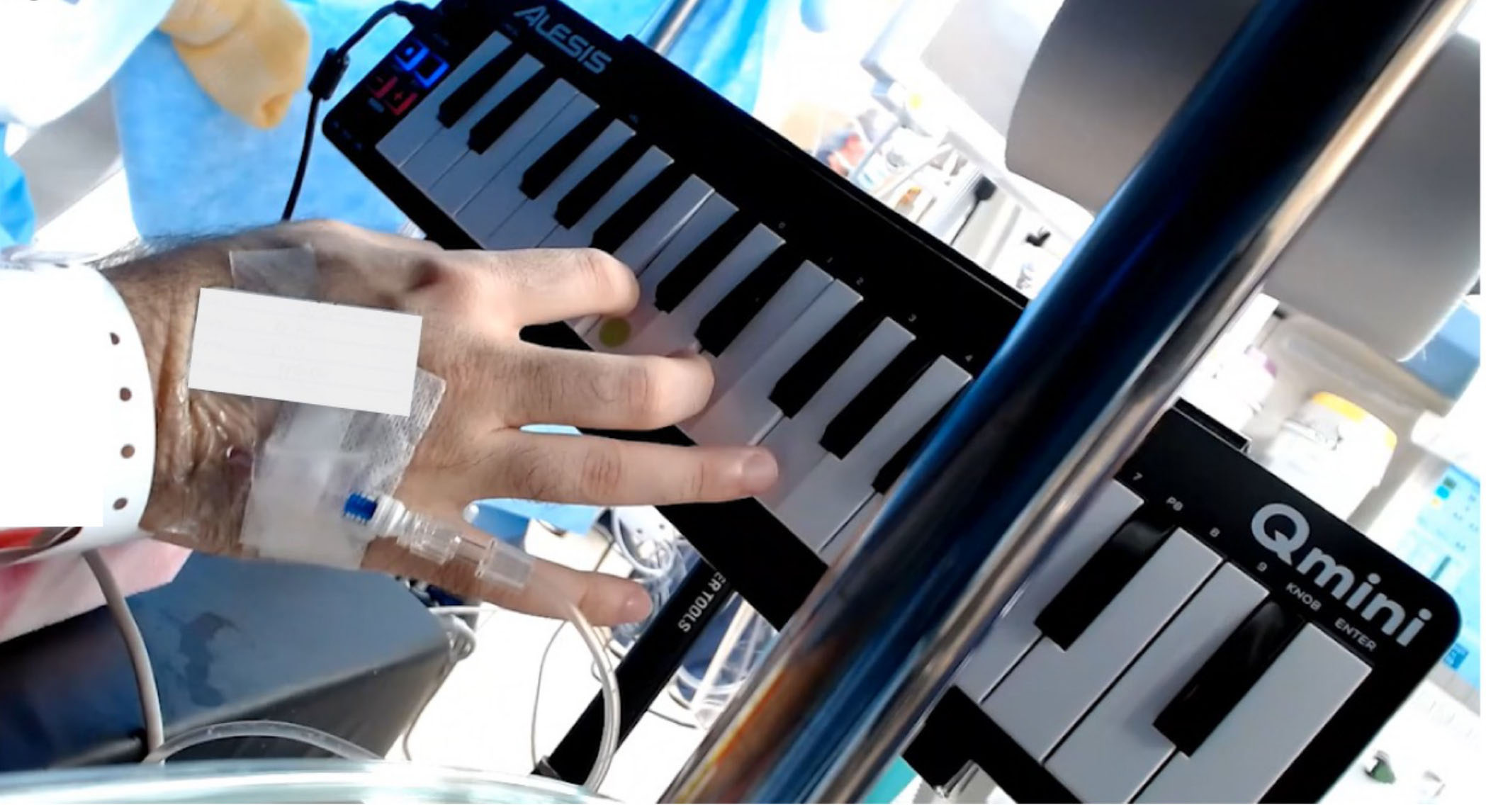
Distinct, though neighboring, areas of the brain are activated when processing music and language, with specific sub-regions engaged for simple melodies versus complex melodies, and for simple versus complex sentences, according to research from UTHealth Houston.
May 24, 2023
Written By: Jeannette Sanchez | Updated: May 24, 2023
Prestigious grants totaling more than $4 million from the National Institute of Child Health and Human Development (NICHD) Maternal-Fetal Medicine Units Network (MFMU) and the NICHD Neonatal Research Network (NRN) have been awarded to UTHealth Houston.
In trauma patients with severe blood loss, if transfusions are working, physicians should not stop giving them to patients regardless of the amount of blood used, and whole blood should be used first, according to new research at UTHealth Houston.
April 17, 2023
Written By: Caitie Barkley | Updated: April 17, 2023
When a person reads a sentence, two distinct networks in the brain are activated, working together to integrate the meanings of the individual words to obtain more complex, higher-order meaning, according to a study at UTHealth Houston.
April 14, 2023
Written By: Caitie Barkley | Updated: April 14, 2023
The presence of a misfolded alpha-synuclein protein can be used to determine if people have Parkinson’s disease, according to a new study using technology developed by a researcher at UTHealth Houston. This biomarker could pave the way for the development of better diagnostic tools and new treatment options for the disease.
March 24, 2023
Written By: Jeannette Sanchez | Updated: March 24, 2023
People infected with SARS-CoV-2, the virus that causes COVID-19, may experience genome structure changes that not only may explain our immunological symptoms after infection, but also potentially link to long COVID, according to a new study by researchers at UTHealth Houston.
March 9, 2023
Written By: John Evans | Updated: March 9, 2023
As a teenager in his native Turkey, Atilla Ertan, MD, spent every day after school in the hospital—but not for himself. “My younger sister had developed a heart problem and had to stay there,” he says. “When I went to see her, I always left impressed with the doctors.”
Seizures can be predicted more than 30 minutes before onset in patients with temporal lobe epilepsy, opening the door to a therapy using electrodes that could be activated to prevent seizures from happening, according to new research from UTHealth Houston.
Three grants totaling $15 million, which aim to enhance knowledge of the brain processes that play a key role in speech, epilepsy, and reading, have been awarded to researchers at UTHealth Houston by the National Institutes of Health Brain Research Through Advancing Neurotechnologies (BRAIN) Initiative.
February 17, 2023
Written By: Courtney Saenz | Updated: February 17, 2023
Cheryl Navar was 24 weeks into her pregnancy when doctors found multiple tumors in her unborn baby’s heart. Before baby Nora entered the world, her soon-to-be parents sat in their hometown in Corpus Christi to learn about a rare disease called tuberous sclerosis complex (TSC).