

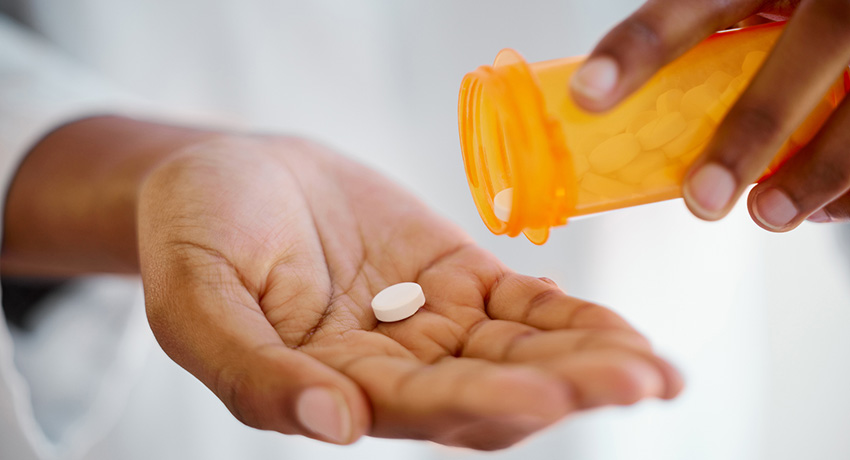

Weight loss medications have transformed the way doctors and patients treat chronic obesity. As the demand for these medications increases, so too have the options for taking them. Following the Food and Drug Administration’s (FDA) approval of several oral medications, patients now have the choice between injectables and pills.
“Some people like oral tablets and some people still prefer the injectables,” said Absalon Gutierrez, MD, an endocrinologist at UT Physicians Endocrinology – Texas Medical Center.
Do weight loss pills work?
The FDA has approved two oral medications to treat chronic weight management in adults with obesity and a third weight loss tablet to treat adults with Type 2 diabetes.
These FDA-approved pills help with weight loss by mimicking a hormone the body naturally produces, glucagon-like peptide-1 (GLP-1).
“The hormone sends messages to the brain to encourage appetite suppression, helping you feel full sooner, and helping your digestion slow down,” said Gutierrez, an associate professor at McGovern Medical School at UTHealth Houston. “Those effects can make it easier for patients to eat less without experiencing the same level of hunger that likely made previous weight loss efforts difficult.”
Are GLP-1 pills safe?
When taken under medical guidance and following proper usage instructions, GLP-1 pills are just as safe as injectable GLP-1 medications and have similar risks.
“Nausea is by far the most common side effect,” Gutierrez said. “At least half of people will get a little bit of nausea when starting a GLP-1 medication, but it should pass within a few weeks.”
Less common side effects include:
- Upset stomach
- Constipation
- Diarrhea
- Vomiting
What is the thyroid warning with GLP-1 medications?
Certain GLP-1 medications carry a boxed warning concerning the potential risk of thyroid tumors. This risk is only associated with people who have been diagnosed with or have a family history of medullary thyroid cancer or the associated syndrome, Multiple Endocrine Neoplasia syndrome Type 2.
“The thyroid warning is for very few people,” Gutierrez said. “About 1% of all thyroid cancers are medullary thyroid cancer.”
Oral versus injectable GLP-1 medications
Both the pill and injectable work similarly to reduce appetite, regulate digestion, and manage blood sugar levels. However, frequency, convenience, and cost differ between the pills and injections. Many injectable GLP-1 medications are taken once weekly, while GLP-1 pills are taken daily.
“For many patients who started on the injections, they already have a routine in place. The injectables are only once a week, so a lot of people find them very convenient and choose not to switch to the pill,” Gutierrez said.
The weight loss pills are also subject to additional rules, such as taking them on an empty stomach or with a certain amount of water. This may add a burden to the patient.
Cost can be equally important. Ultimately, choosing between the tablet and the injectable can come down to how much insurance will cover.
“That’s probably the biggest factor,” Gutierrez said.
Similar to the injectables, oral GLP-1 medications are not a quick fix and require lifelong commitment to maintain weight loss. Therefore, cost can ultimately determine which medication is realistic for an individual patient.
What is the future of oral GLP-1 therapy?
GLP-1 medications will continue to innovate, with researchers eager to explore ways to make them more effective with simpler dosing.
“Over time, I think oral GLP-1 medications will become a lot more popular, but for right now it seems patients enjoy the convenience of a weekly injection over a daily pill,” Gutierrez said.
Lifelong successful weight loss isn’t as simple as taking a daily pill. To maintain GLP-1-assisted weight loss, patients often must adjust their lifestyle to include a healthier diet, aerobic exercise, strength training, and restful sleep each night.