

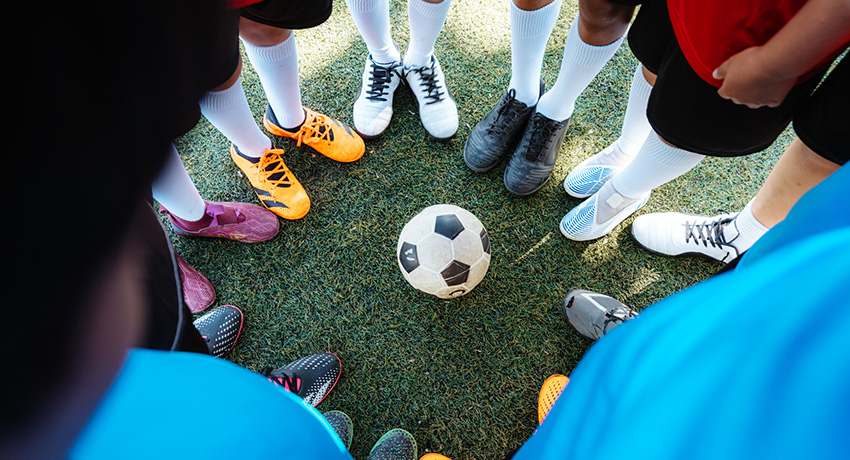
Soccer fever is here, and soon to follow will be young players’ dreams of soccer glory and gold.

“This is an exciting time. This type of global event is hard to hide from, and it’s going to inspire kids to get moving, which is fantastic,” said Angie L. Curtis, MD, a pediatric sports medicine specialist with UT Physicians Pediatric Orthopedics – Bellaire.
Children don’t have to be world-class athletes to join the fun and benefit from this universal sport.
“All you need is a ball to ignite the fun, and it helps if they connect with a team or hero they can aspire to be like,” said Curtis, an assistant professor in the Department of Pediatrics at McGovern Medical School at UTHealth Houston.
Physical health benefits of soccer for children
Soccer requires a lot of movement. From short sprints to long runs down the field, each game can have a player standing and moving for 20-45 minutes at a time, depending on their age.
“Following a ball also adds the distinct challenge of moving the body in different ways. Players are cutting diagonally, rotating, spinning, and even jumping sometimes,” Curtis said. “Changing direction frequently offers the added benefit of building nerve pathways and muscle control.”
- Cardiovascular fitness and endurance: Sustained movement for 30 minutes builds aerobic endurance. The high intensity bursts of speed teach the heart to adapt and pump more efficiently.
- Strength, coordination, and motor skills: Learning to control, dribble, and kick a ball, often while fending off a competitor, builds balance and agility.
- Bone health: As a weight-bearing sport, running, jumping, landing, and kicking force bones to adapt and grow to support the body’s movements.
Mental and emotional benefits of soccer for children
Moving the body releases dopamine and endorphins, known as happy hormones. Being outside in sunlight, connecting with teammates, and unifying around a common goal, whether losing or winning a game, will increase these happy hormones.
- Building confidence and resilience: Learning through wins and losses, setting and achieving goals, reinforces self-esteem and builds self-confidence.
- Stress relief: Endorphins are released during physical activity to counteract stress levels.
- Reducing screen time: Being outside, being physically active, and using the senses to play provides a healthier dopamine reward than a screen.
“Children don’t gain anything from playing soccer on a screen. It doesn’t make you faster, stronger, or smarter,” Curtis said. “All the best benefits can be obtained by being outside and being physically active.”
Social development through team play
Soccer promotes healthy social skills and a sense of belonging through teamwork and group play.
- Communication and teamwork skills: With 11 different positions on the field, communication and awareness are imperative for success. The teamwork required builds collaboration and leadership skills.
- Making friends and building community: Spending extended time on a team creates an organic setting to build friendships and opens the opportunity for social connection.
- Accessibility and community: Requiring minimal equipment, soccer is a highly accessible game for children of all economic backgrounds and communities, creating a melting pot of teammates.
What parents should know
When children start playing soccer, fun and athletic literacy (stopping, changing direction, anticipating the ball) should be prioritized over competition. Honing foundational soccer skills, such as passing, dribbling, and ball control, will lay the groundwork for more fun.
“Especially for children 6 and younger,” Curtis said. “Soccer should be taught through playful games and simple instruction to keep it fun.”
- What age to start: Children can start playing soccer as early as age two, when leg coordination is developing. Start with balance and ball passing in the backyard.
- What level: Teams should be formed by birthdate, not just by age or grade level.
- How often: To reduce burnout and the risk of injury, young athletes shouldn’t compete or practice more hours per week than their age in a single sport.
Balance fun with performance
For a long and healthy experience playing soccer, players have to enjoy the game while reducing the risk of injury. Incorporating sports safety strategies, such as rest and recovery, will help prevent overtraining.
When on the soccer field, always prioritize stretching, warmups, and cooldowns. When resting at home, prioritize quality sleep.
“Sleep is underrated when it comes to performance, but it is a key factor to give the body a chance to repair, refuel, and recoup. Lack of sleep has a domino effect, leading to poor food choices, impaired decision-making, and reaction time, which can increase the chance of injury on the field,” Curtis said.
Turn global soccer passion into lifelong healthy habits
Use the soccer energy pulsing around the globe to fuel an interest in playing sports. Watch a few matches as a family, buy an inexpensive ball, and kick it around just for fun. Encourage a playful, fun atmosphere around soccer to build a child’s interest. Soccer is a simple sport with broad, universal appeal that can build healthy habits physically, emotionally, and socially for growing children.