
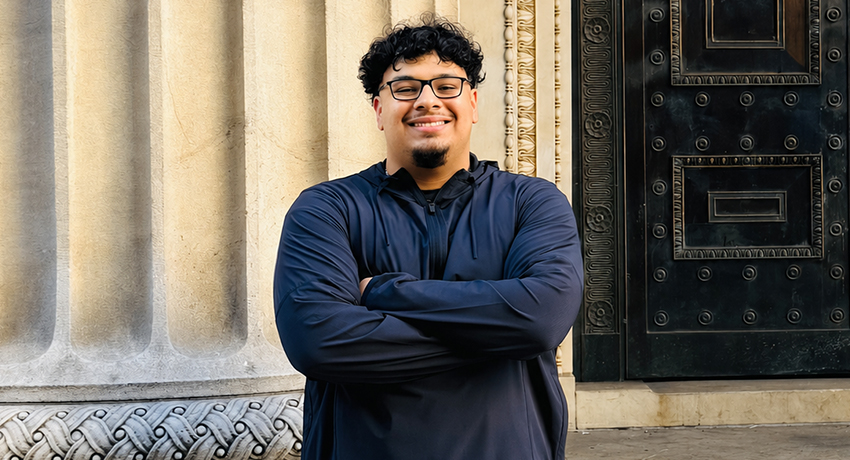
By 20, John Longoria had already faced four surgeries on four different parts of his body—all tied to sports he loved. What he didn’t expect was that those setbacks, guided by the same surgeon, would lead him to something more lasting: a sense of purpose.
“It’s weird to think about life before my injuries because they’ve altered my life and career path so much,” John said. “They introduced me to this whole new world, and I wouldn’t be studying exercise sports science.”
Beginning the journey
Little League and football shaped John’s childhood. He caught football fever in fifth grade, and it stuck. As an offensive lineman in middle school and high school, he dreamed big.
“I wanted to be in the NFL,” John said. “Then I got that first shoulder diagnosis, and reality set in. I’m not invincible. Not everything goes your way.”
That diagnosis came the summer before his junior year: a labral tear in both shoulders, worse on the left. He had a history of shoulder dislocations but kept playing. When the pain worsened, an MRI confirmed the extent of the injury.
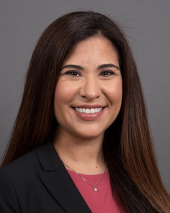
His family physician referred him to Jessica L. Traver, MD, a dual fellowship-trained pediatric and sports medicine orthopedic surgeon at UT Physicians Orthopedics at Memorial Hermann | Rockets Sports Medicine Institute – Sugar Land, who walked the family through his options. It was too late in the summer to operate and recover before football season—no small consideration in Texas. Together, they chose a conservative plan: brace it, do physical therapy, and plan for surgery after the season.
“It’s definitely a shared, decision-making process,” said Traver, also an assistant professor in orthopedic surgery at McGovern Medical School at UTHealth Houston. She made sure the family understood the risks of waiting, including additional damage and early arthritis.
Progressing to the first shoulder repair
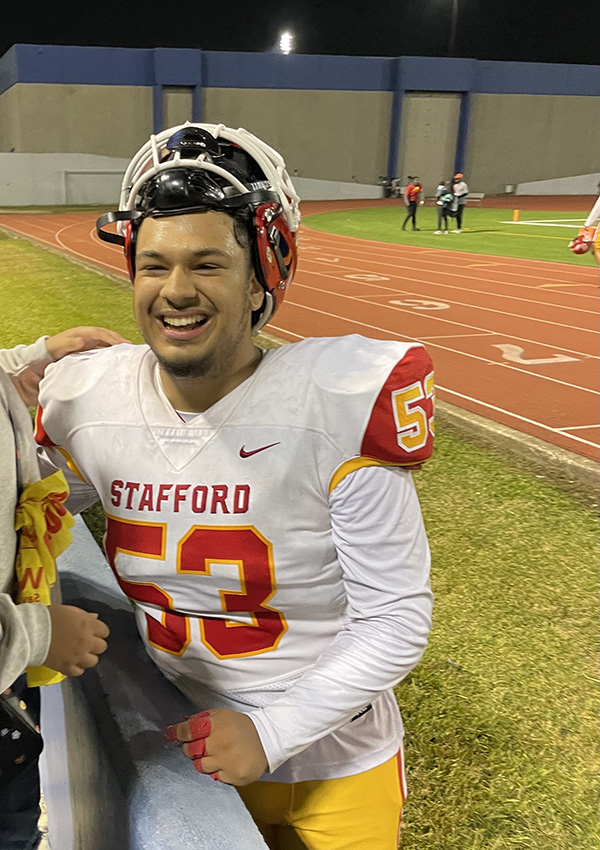
Traver performed an arthroscopic shoulder labral repair on John’s left shoulder in December 2021, right after the playoffs. After four weeks of rest, he began three months of physical therapy to rebuild strength and range of motion.
The experience left an impression.
“He was great, talking to me and telling me his stories,” John said of his physical therapist. “That’s honestly what got me interested in physical therapy.”
Traver repaired John’s right shoulder in May 2022, with the same sequence of rest and five months of physical therapy.
John worked hard to return to his senior football season in October. His return game—homecoming—was unforgettable.
“I had never seen my son smile so big when he saw his cousins and best friends after the game,” his mother, Melinda, said. “They rallied around him. If only they knew how much John needed this. It’s a core memory etched in his heart.”
The pitch that hurt
With two shoulder surgeries behind him, John thought spring semester would finally be his to enjoy. It wasn’t.
On the third day of varsity baseball tryouts, a pitch hit the tip of his index finger. John thought he’d jammed it, yet two weeks passed, and he still couldn’t bend it. An X-ray showed the bone inside his knuckle had shattered and begun healing incorrectly.
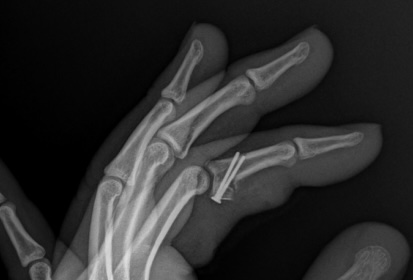
Traver consulted with colleagues and brought in a hand specialist, Candace B. Teunis, MD, an orthopedic hand surgeon at UT Physicians Orthopedics at Memorial Hermann | Rockets Sports Medicine Institute – Sugar Land. Together they performed a complex procedure called a hemi-hamate arthroplasty, using bone and cartilage from another bone to reconstruct the joint and reduce the risk of arthritis.
“The fact that she brought in a specialist to make sure everything was done right really meant a lot to me,” John said.
His mother remembers the teamwork.
“They were the dynamic duo, special-skilled female surgeons working together, troubleshooting with all their orthopedics expertise combined,” Melinda said. “Honestly, in my eyes they were superheroes.”
The fourth surgery
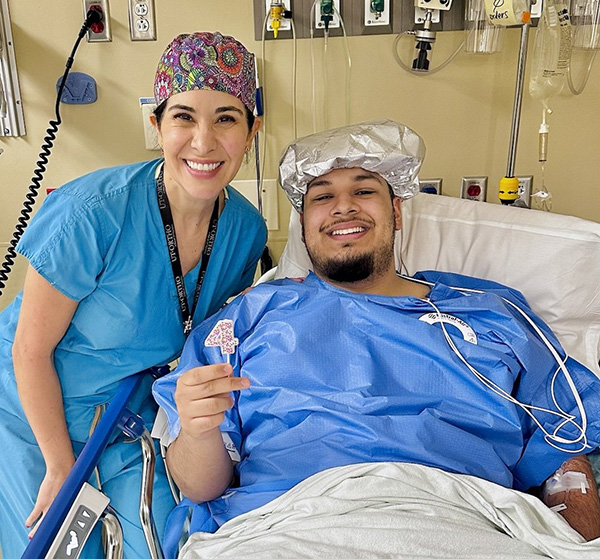
After graduating, John started college at Texas State University. One afternoon during a pickup basketball game, he landed awkwardly and felt a sharp crunch. He couldn’t walk on his leg.
An MRI back in Houston confirmed a torn ACL. When Traver walked into the exam room to deliver the news, John already knew from her face.
“That was probably the lowest I’d ever felt,” John said. “I’d made so much progress, and suddenly I was starting over. I was thinking, ‘What’s wrong with me?’”
On the morning of his fourth surgery in March 2024, Traver walked in holding a candle shaped like the number four—a lighthearted nod to their fourth surgery together.
“It took all the nerves away,” John said. “I knew I was in good hands. That was a really cool moment.”
Recovery and resilience
After surgery, he didn’t return to his college campus and continued from home. Recovery from ACL surgery was his most difficult yet: four weeks on crutches and more than a year of physical therapy. He felt he was in a dark place, navigating the challenges of recovery and having to rely on others.
“There was a point where I just broke down in front of my family,” John said. “All of these emotions at once. But my mom, my sister, my dad, my grandma all kept me going. They were my rock.”
Traver had been watching for signs of mental health concerns. She talks with all her young patients about the mental side of recovery—fear of reinjury, loss of self-identity, disrupted sleep, the loneliness of being sidelined.
“It’s my job to take care of the whole athlete,” Traver said.
She connected John with support resources and checked in on him every few months. She also stressed the importance of tangible milestones to keep him engaged and motivated during the lengthy physical therapy.
“John’s discipline was impressive,” Traver said. “His story is such a great example that nothing will be placed in front of you that you can’t overcome.”
According to Melinda, John and Traver share a special bond—one that she can’t even describe.
“I believe God had a hand for their paths to cross and the stars aligned,” she said. “She was there for the toughest moments in John’s life as a teenager and his saving grace.”
Finding his calling
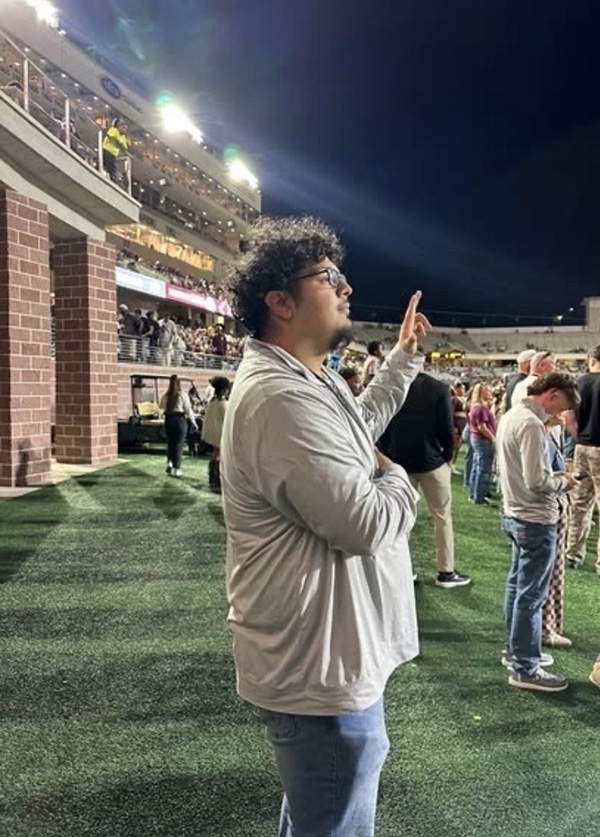
John just completed his junior year at Texas State University and was selected to join their sports medicine summer internship program. His scars—two shoulders, one finger, and a knee—no longer bother him.
“I’m proud of them,” John said. “They show what I’ve been through and came out on the other side, better.”
The injuries that once sidelined him shaped a new direction. John now plans to become a physical therapist or athletic trainer, helping young athletes return to the sports they love.
Traver believes he’s well suited for it.
“Athletes trust other athletes who’ve been through it,” Traver said. “He’s the definition of resilience and an inspiration.”
In the fall, John will be back under the college football lights supporting the Texas State football team from the sidelines. On these Saturday gamedays, he now supports the assistant athletics director. The dream may look different now, but the impact he’ll make is just beginning.