Alert!

There has been an error in displaying this message. Please contact the site administrator.

News & Articles

UTHealth Houston Research

Therapies that target the utilization of fat by tumors and activate a type of cell death dependent on fat molecules may be a promising avenue to treat cancer, according to new research by UTHealth Houston.
January 15, 2026
Written By: Laura Frnka-Davis | Updated: January 15, 2026
Researchers at UTHealth Houston have been awarded three grants totaling more than $5 million from the National Institutes of Health and the National Science Foundation (NSF) to address one of the biggest challenges in modern health care: building enhanced data resources and technologies to accelerate scientific discovery and improve decision-making in medicine.
December 9, 2025
Written By: Caliann Ferguson and Roman Petrowski | Updated: December 9, 2025
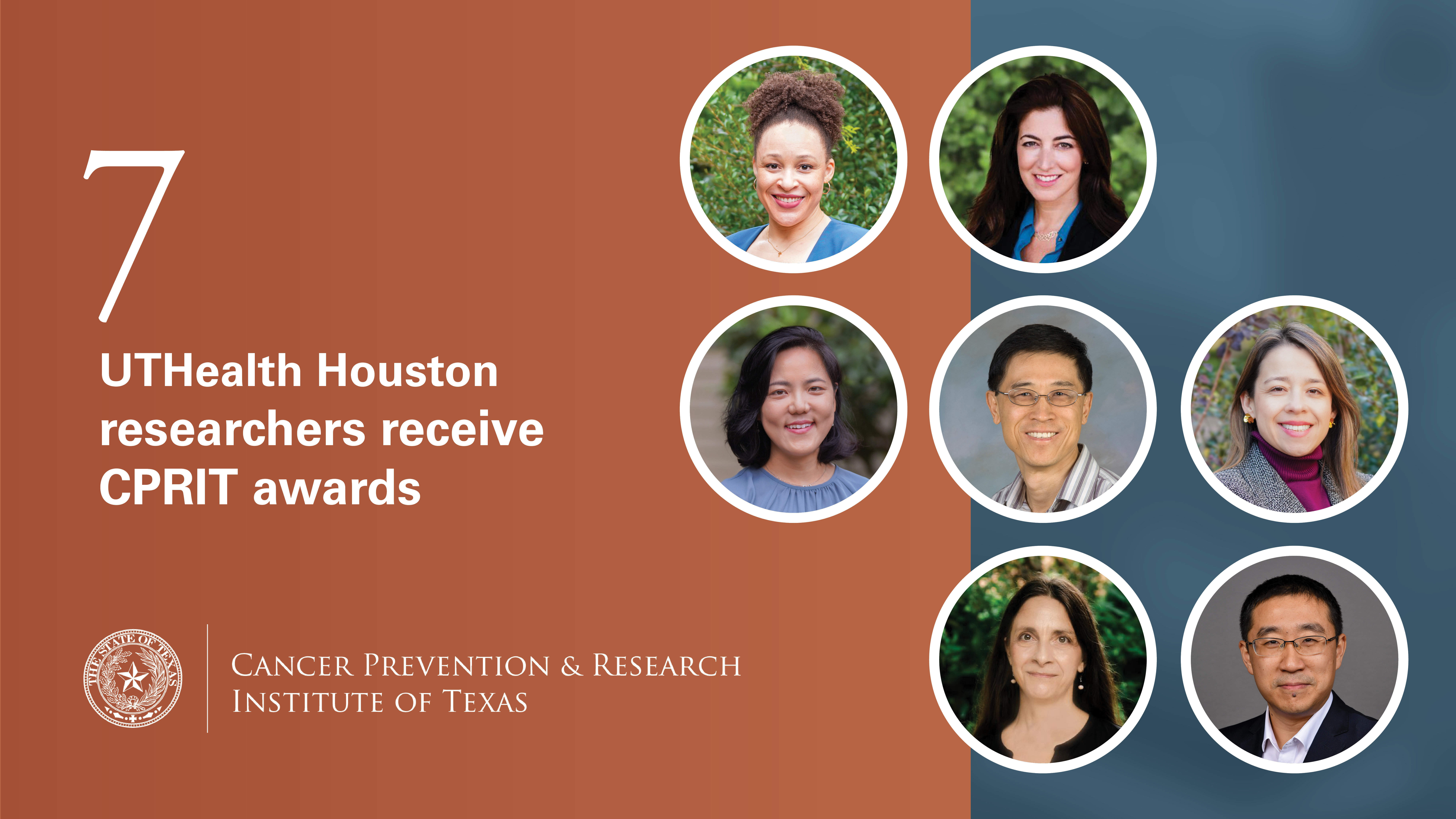
Seven UTHealth Houston researchers received awards totaling nearly $10 million in funding from The Cancer Prevention and Research Institute of Texas (CPRIT), a state legislative initiative designed to advance cancer research and prevention in Texas. The recipients oversee initiatives spanning multiple strategic and beneficial areas within cancer research and prevention.
December 9, 2025
Written By: Roman Petrowski | Updated: December 9, 2025
A study from the lab of Faraz Bishehsari, MD, PhD, professor in the Department of Internal Medicine at McGovern Medical School at UTHealth Houston, and director of the Gastroenterology Research Center, seeking to develop new methods to personalize treatment for pancreatic ductal adenocarcinoma, has been funded by the National Institutes of Health.
December 9, 2025
Written By: Roman Petrowski | Updated: December 9, 2025
Recent research from the lab of Valeria Vásquez, PhD, associate professor in the Department of Biochemistry and Molecular Biology at McGovern Medical School at UTHealth Houston, shows that PIEZO1, an ion channel that helps regulate red blood cell volume, may be a key driver of cell dehydration, hemolysis, and inflammation in sickle cell disease.
A five-year, $2.8 million grant was awarded to researchers at UTHealth Houston by the National Institutes of Health to evaluate the long-term effects on patients enrolled in the “Cryopreserved Human Umbilical Cord as a Meningeal Patch in Fetoscopic Spina Bifida Repair” trial.
A new oral GLP-1 medication can help adults with obesity and Type 2 diabetes lose more weight and improve their blood sugar levels compared to a placebo, according to findings from the ATTAIN-2 trial led by a UTHealth Houston researcher.
A $100,000 grant awarded to researchers at UTHealth Houston from the John Ritter Foundation will fund an app that will help clinicians recognize, access, and manage thoracic aortic disease.
December 8, 2025
Written By: Catherine Marfin | Updated: December 8, 2025
Evan Cadena was 19 years old when he suffered an ischemic stroke in May 2023. It was the third time a stroke caused him to lose mobility in the right side of his body since he was 16, when doctors in the Rio Grande Valley found an arteriovenous malformation, or AVM, in his brain.
Researchers at UTHealth Houston are examining the biological effects of prenatal cannabis exposure and its potential impact on fetal brain development. Supported by a $3.7 million grant from the National Institutes of Health and the National Institute on Drug Abuse, the study aims to improve screening tools, public health guidance, and prenatal care strategies for pregnant women who use cannabis.